Japan in Autumn, Seen Differently
Autumn in Japan is tracked like a weather front. The koyo forecast updates daily from late September onward, charting the slow southward movement of colour as the temperatures drop. By the time it reaches the mountains around Tokyo, you have roughly ten days to be in the right place at the right moment. Most visitors arrive hoping. A private guide arrives knowing.
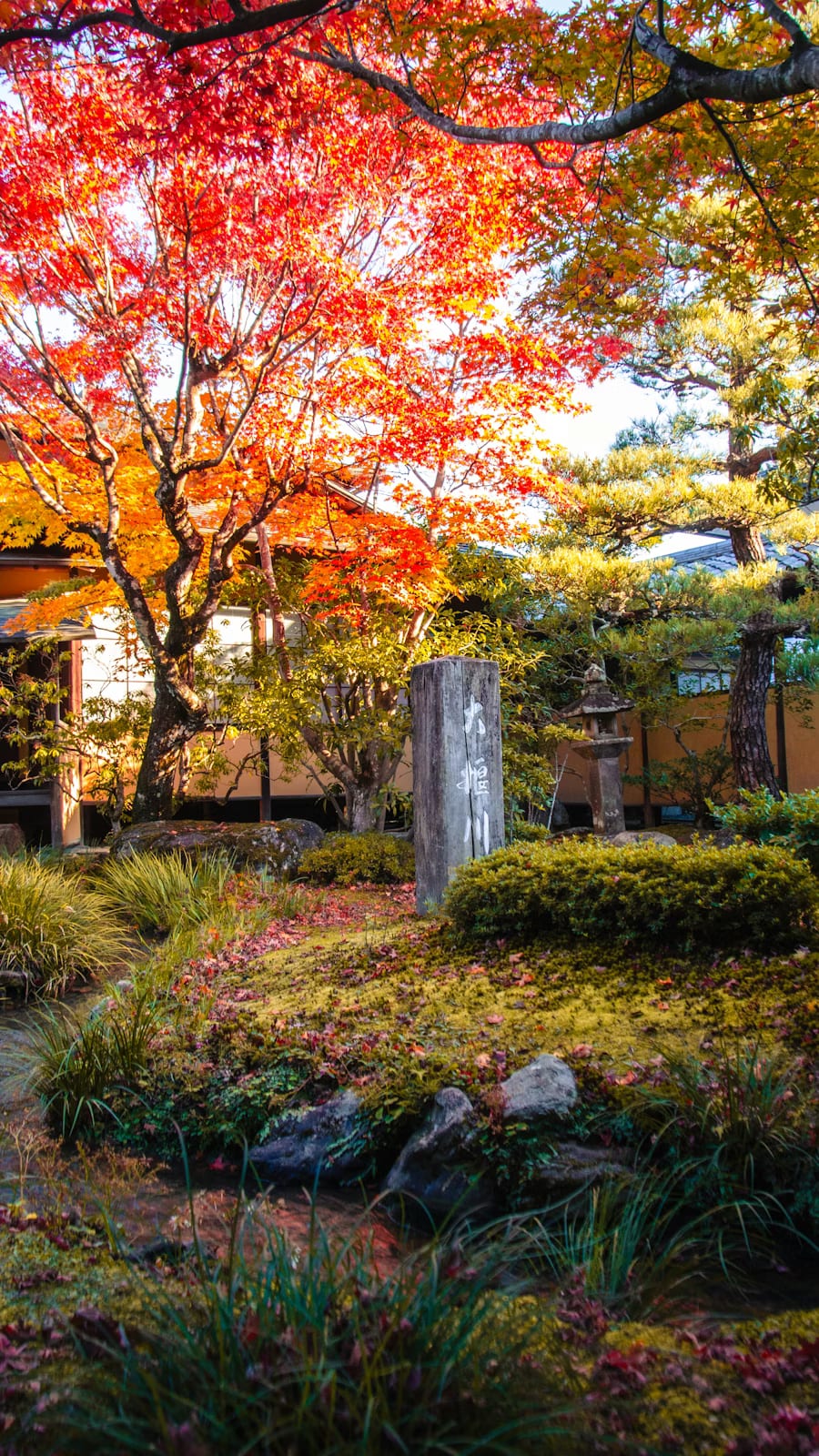
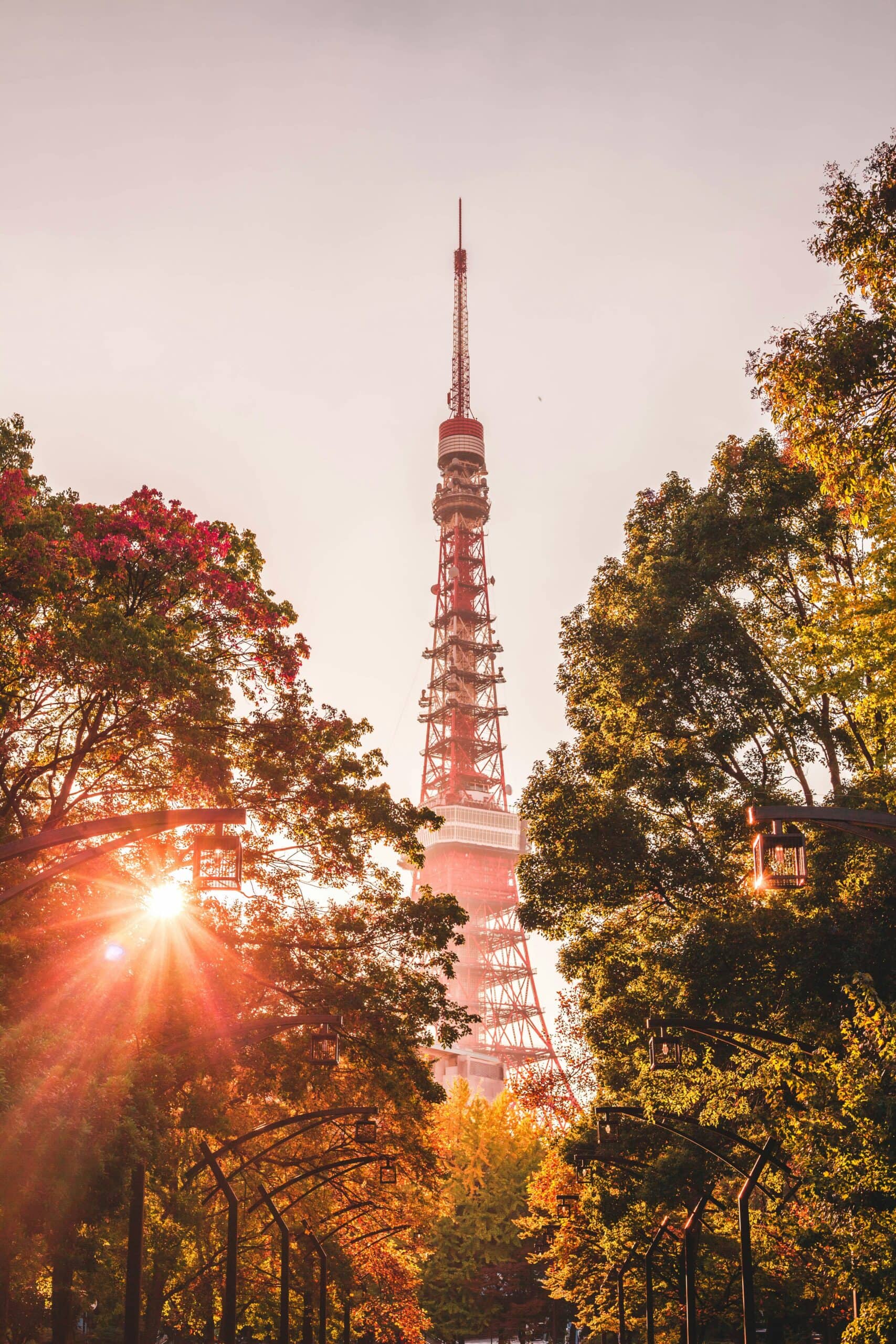
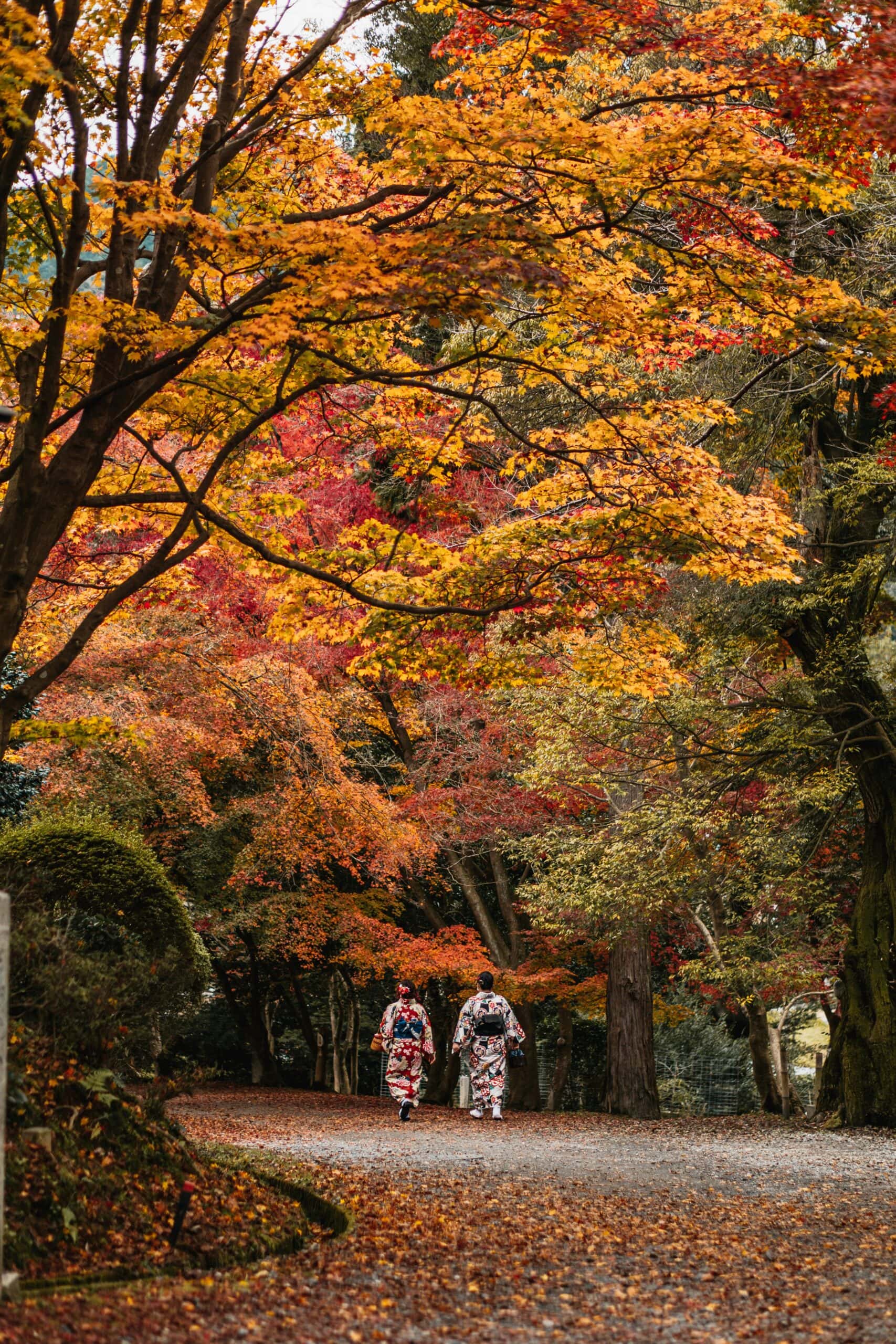
The koyo season layers colour over familiar landscapes. What you see depends less on where you are than on when you arrive, and peak colour at any single location lasts five to seven days at most.
What koyo is, and why timing is everything
Koyo is the Japanese word for the seasonal change of leaf colour in autumn. It is not a single event. The colour moves through the country like a slow tide, beginning in Hokkaido in late September and reaching the mountains around Tokyo in late October, the city parks in mid-November, and the coastal areas of Kamakura by late November and into December.
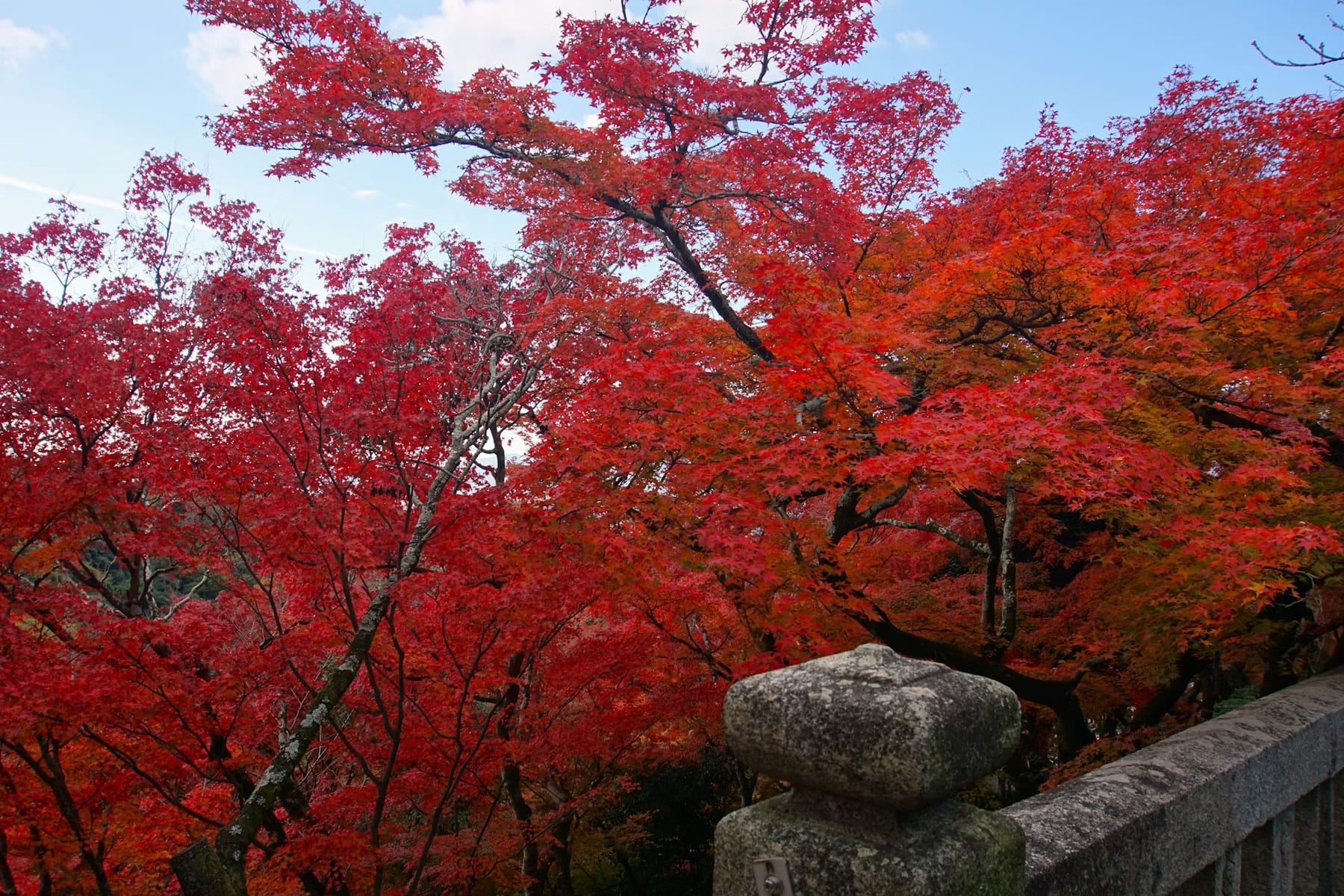
The species matter. Japanese maple, or momiji, produces the deepest reds. Ginkgo turns pure yellow and drops its leaves in a single concentrated period. Beech and oak provide the amber middle tones. A landscape with all three in the same week is rare, and it is what makes certain destinations worth the journey.
The koyo forecast updates daily. Your guide checks it before you wake up and adjusts the day accordingly.
The practical challenge is that peak colour lasts five to seven days at most in any given location. Arrive a week early and the trees are still green. Arrive a week late and the leaves are on the ground. A private guide who monitors conditions in real time is not a luxury during autumn: it is the difference between seeing the colour at its peak and missing it entirely.
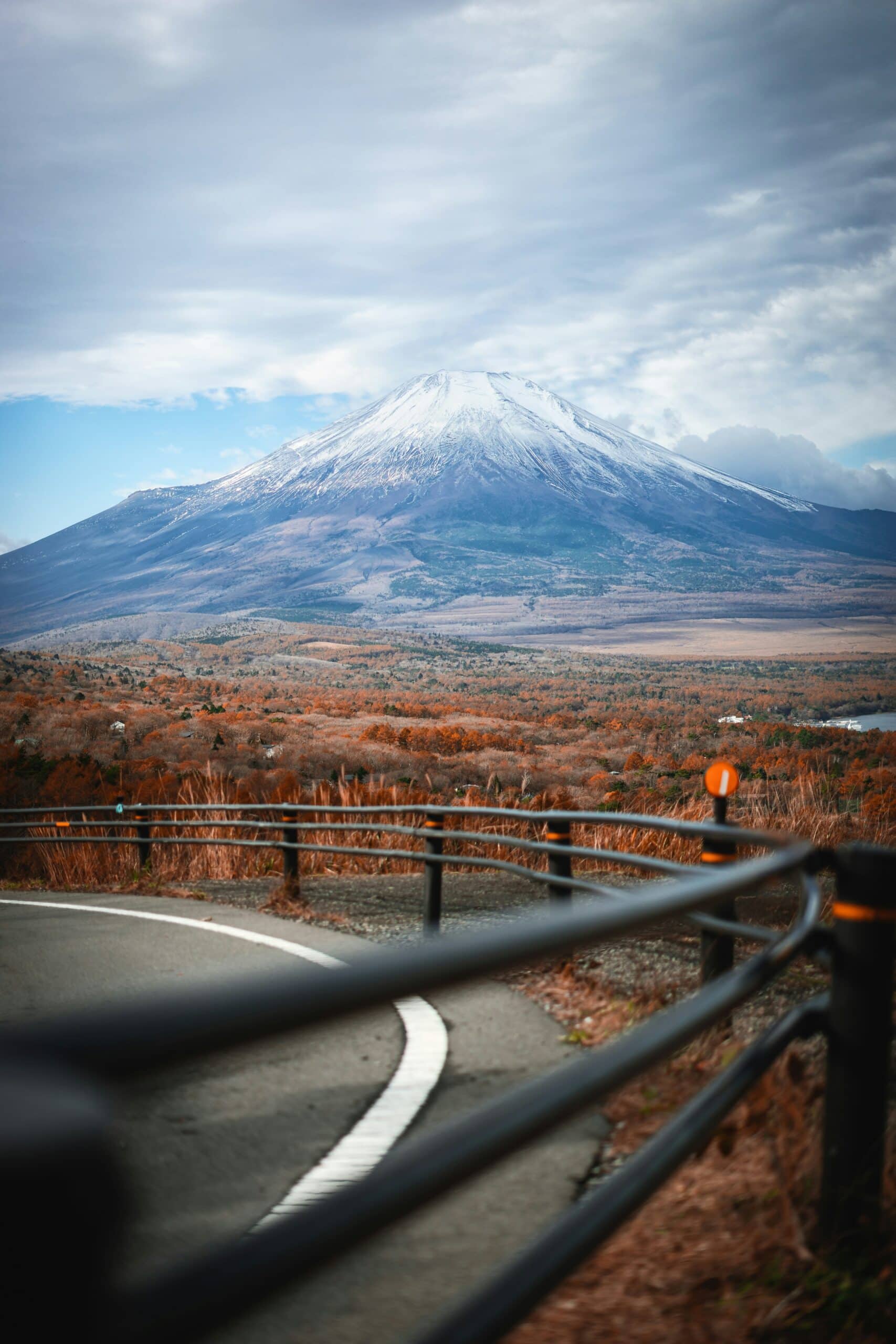
Seen from elevation, the koyo season reveals itself as a geography. Higher ground turns first, the colour moving downhill over two to three weeks. A private guide reads this map and positions you at the right point on it.
Nikko: the most dramatic autumn within reach of Tokyo
Nikko sits at higher elevation than most destinations reachable from Tokyo, which means its autumn colour arrives earlier, peaks more intensely, and surrounds a landscape that is already extraordinary. The ancient cedar forest on the approach to Tosho-gu Shrine, some of the trees over four hundred years old, provides a dark green canopy that makes the surrounding maple and beech colours appear brighter by contrast.
The Kegon waterfall, ninety-seven metres high and fed by Lake Chuzenji above, is framed by autumn colour in late October and early November. The walk along the lake shore, through birch forest turning pale gold, is one of the quieter experiences in an area that fills up on peak autumn weekends. Your guide will know which paths remain uncrowded and which viewpoints offer the composition that most visitors miss because they are following the same circuit.
Your guide's timing advice Nikko's peak colour typically falls in late October to mid-November, one to two weeks before the valleys below. If you are visiting Japan specifically for the autumn, Nikko should be the first day trip you plan, not the last. A weekday visit avoids the weekend crowds that gather at Tosho-gu at the height of the season.
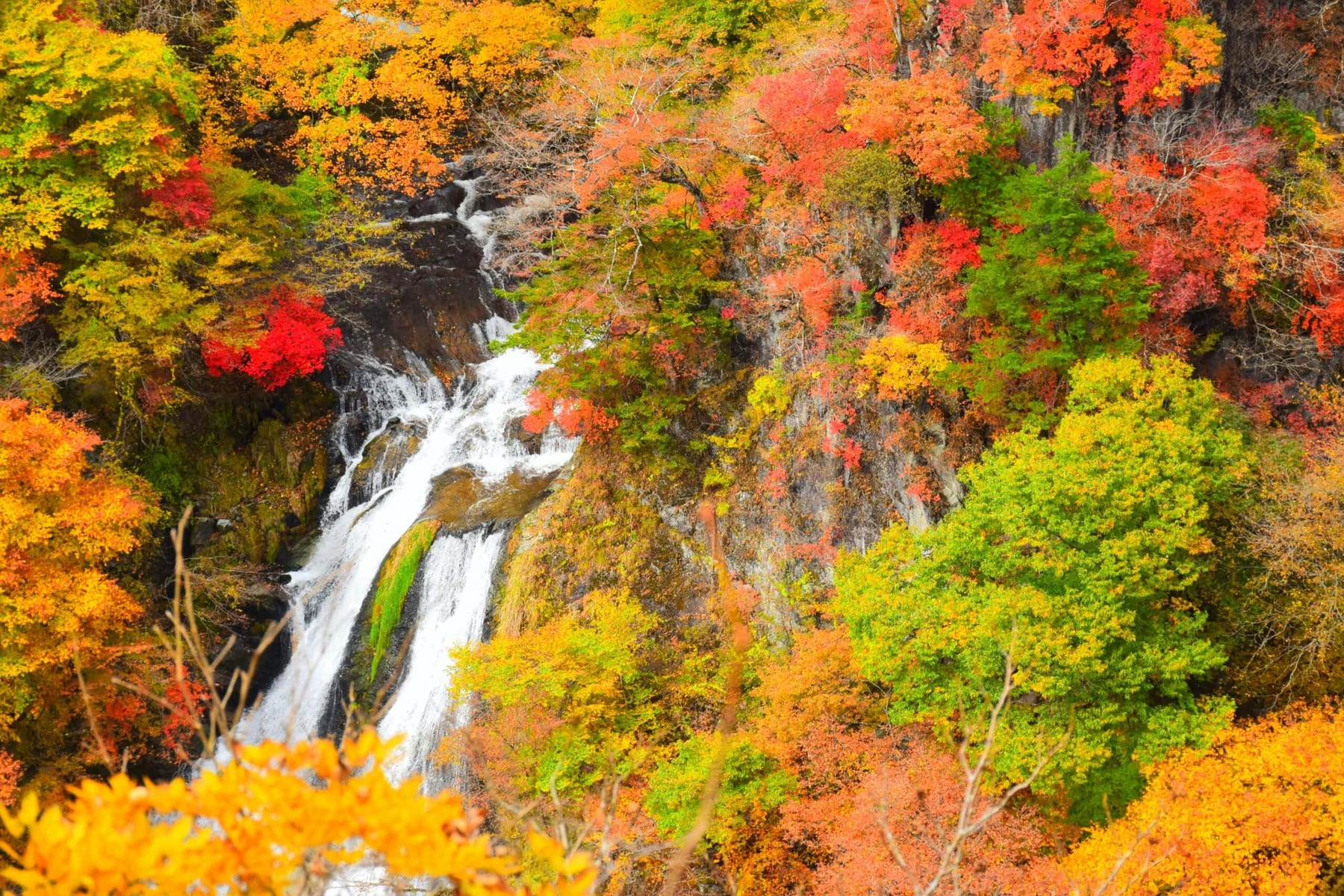
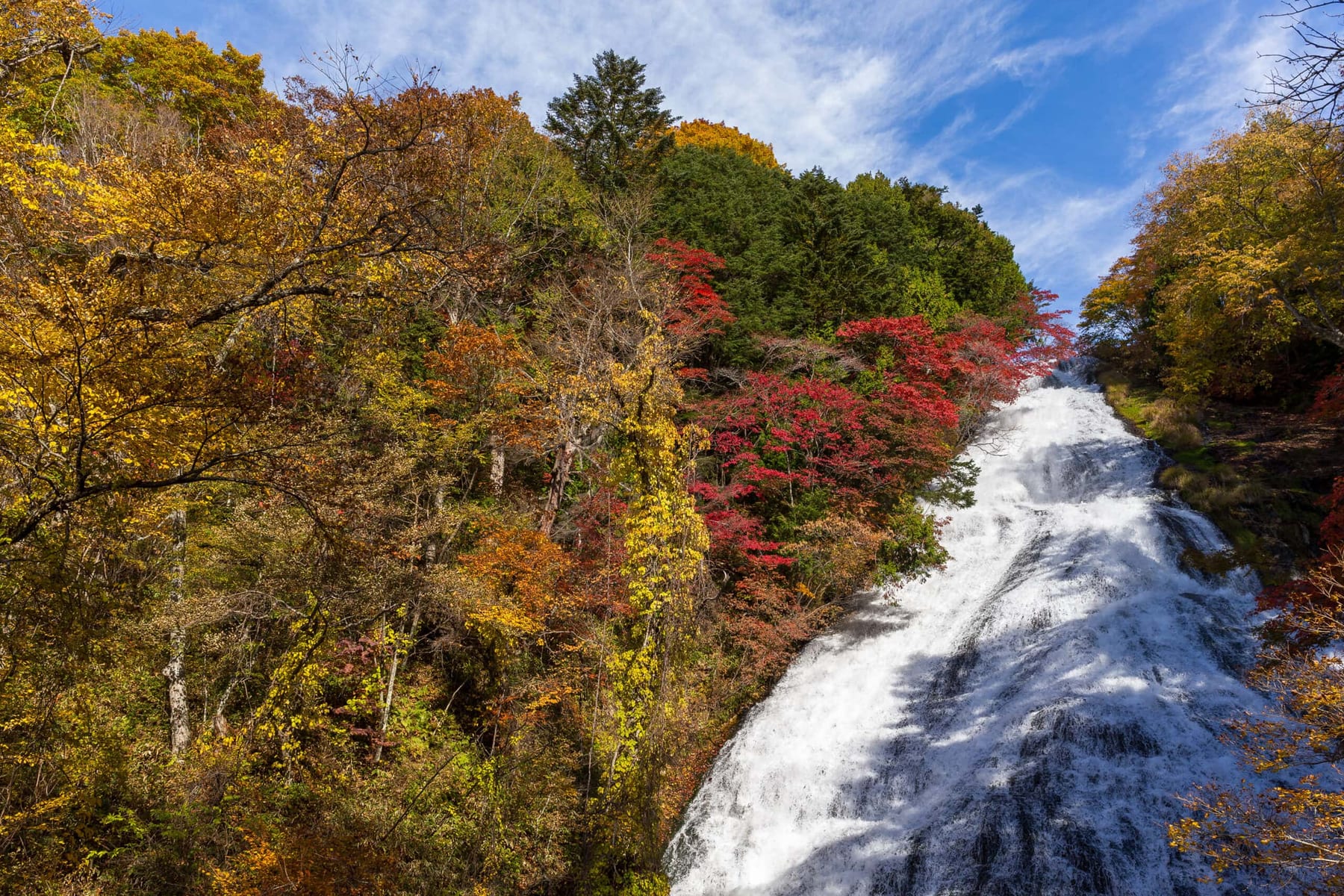
The colour of Nikko sits inside a landscape that is already remarkable. The autumn foliage frames ancient cedar, hillside shrines, and the valley below, each element adding depth to the next.
Hakone: autumn colour with Mount Fuji on the horizon
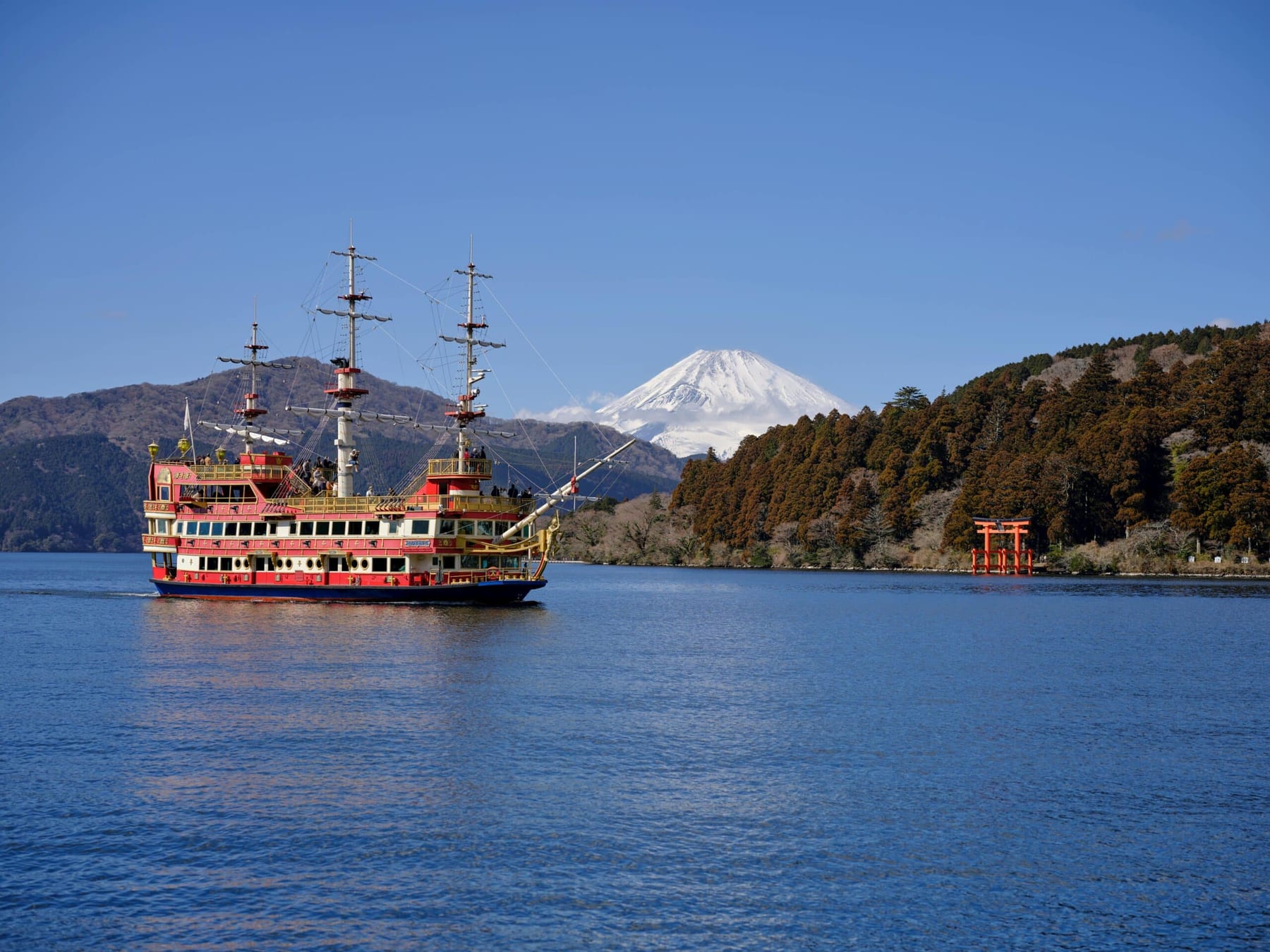
Hakone's autumn is quieter than Nikko's but more layered. The colour arrives in mid-to-late November, later than in the mountains to the north, and it combines with the clearest Mount Fuji views of the year. Autumn and winter are the best seasons for seeing Fuji from the Hakone caldera: the air is dry, the haze of summer is gone, and the mountain appears closer than it does in spring or summer.
The Owakudani volcanic valley, usually visited for its geological drama, takes on an additional dimension in autumn when the surrounding hillsides turn. The steam from the vents rises through red and orange foliage. Lake Ashi reflects the colour of the trees along its western shore. The cedar forest above Hakone Shrine, always dark and ancient, provides a counterpoint to the colour that makes the maple appear more vivid by comparison.
Tokyo: ginkgo gold, before the day trips
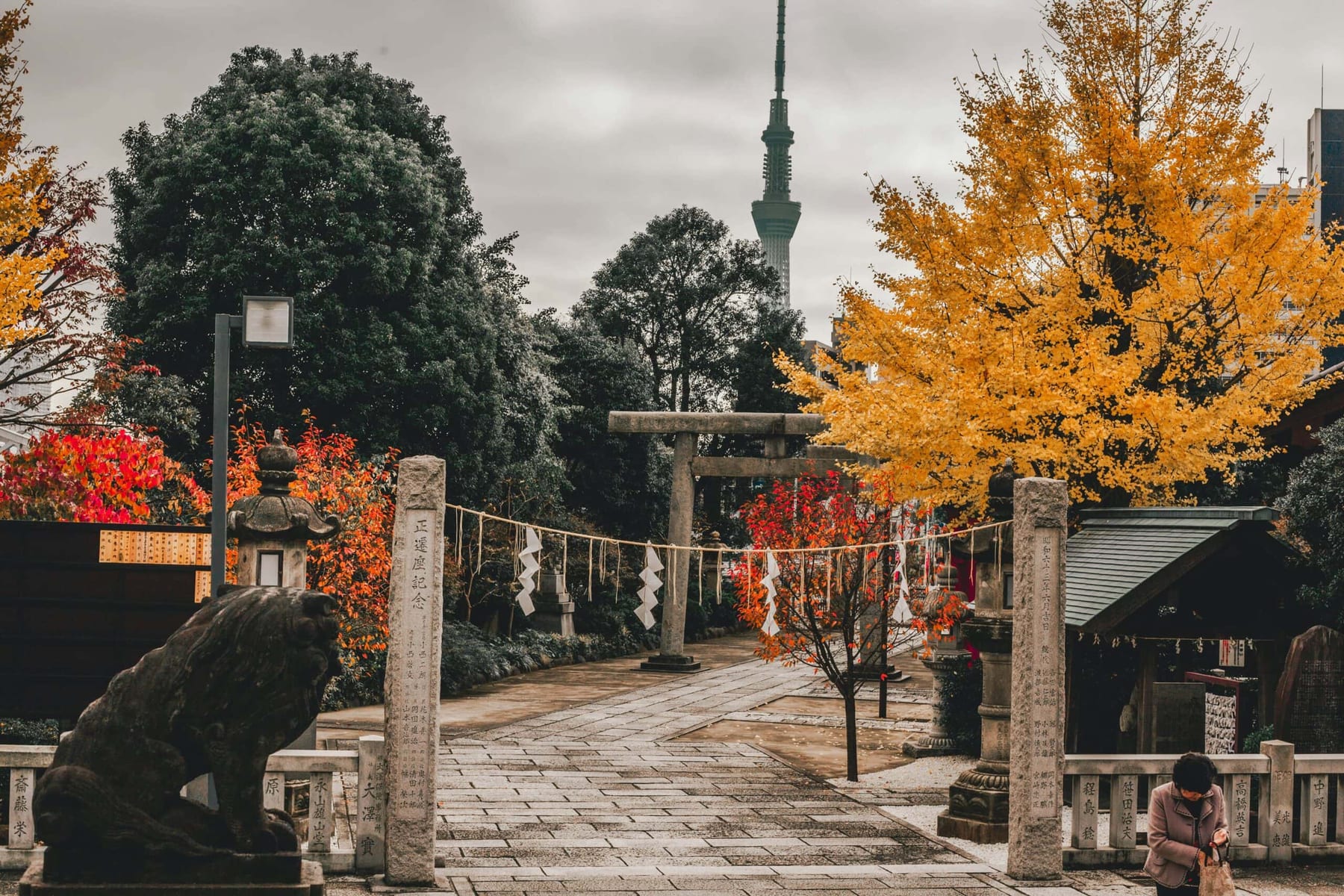
The ginkgo avenue at Meiji Jingu Gaien is Tokyo's most celebrated autumn street. A hundred and forty-six trees, most of them over a century old, line three hundred metres of promenade and turn uniformly gold between mid and late November. The leaves fall together. For a week, the ground and the canopy are the same colour.
Tokyo's own autumn is concentrated in a few remarkable spots. The ginkgo avenue at Meiji Jingu Gaien is the most dramatic. However, the city's colour peaks late and moves fast. Most visitors combine a morning at Jingu Gaien with a day trip, using the colour in the city as a frame for the rest of the season rather than its centrepiece.
Kamakura: late colour, fewer crowds
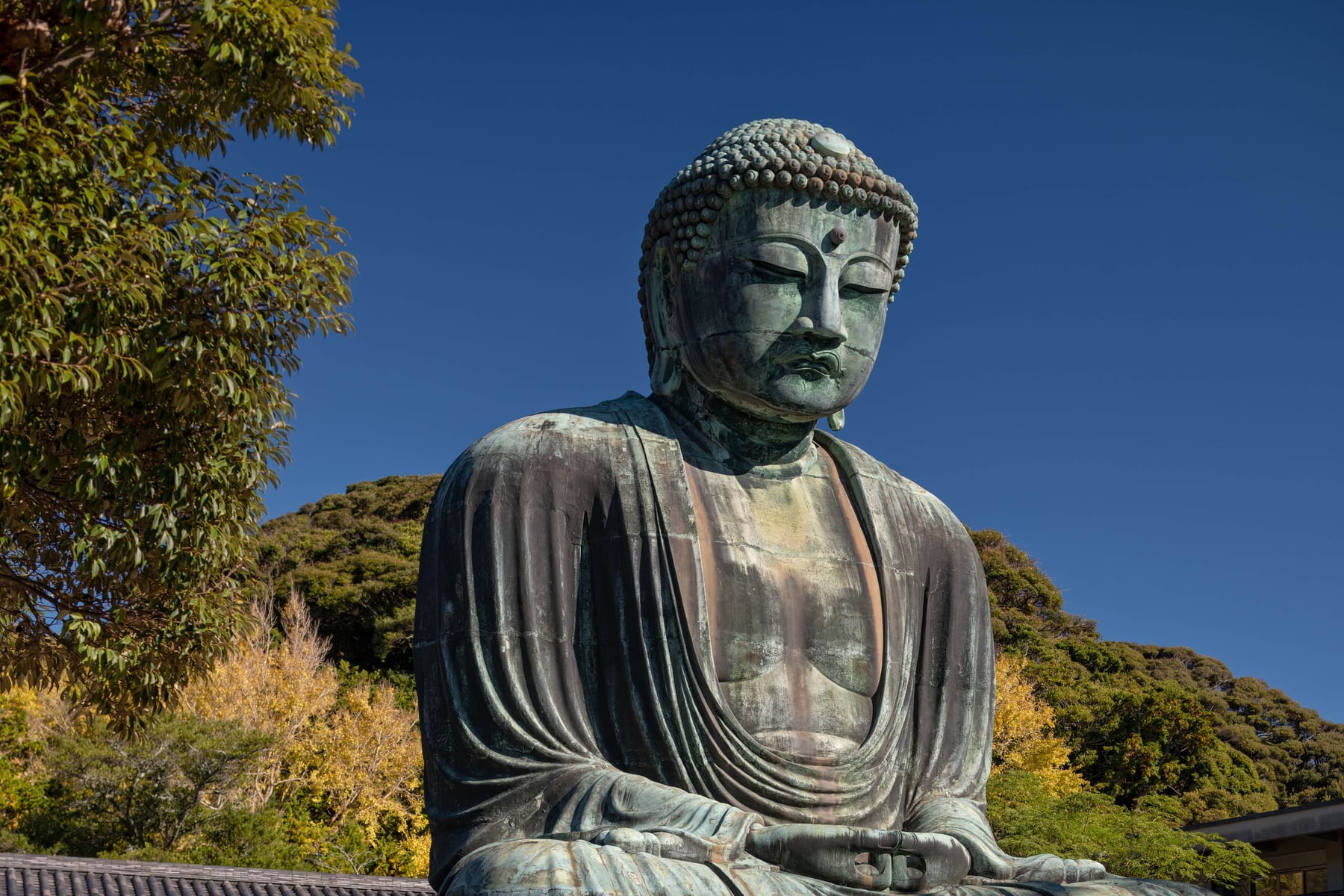
Kamakura's autumn peaks last, often well into December. This is because of its coastal position and lower elevation. It is therefore a strong option for visitors who have already seen Nikko and Hakone and want a third experience. It also works well for those travelling in late November and early December, when the colour has faded elsewhere.
The temple valleys
The temples of Kamakura sit in narrow valleys between the hills. As a result, the autumn colour collects there in a particular way: dense, enclosed, and lit from above. Engaku-ji and Kencho-ji are the two main Zen temple complexes. Both have grounds worth seeing in any season, but they become exceptional in late November.
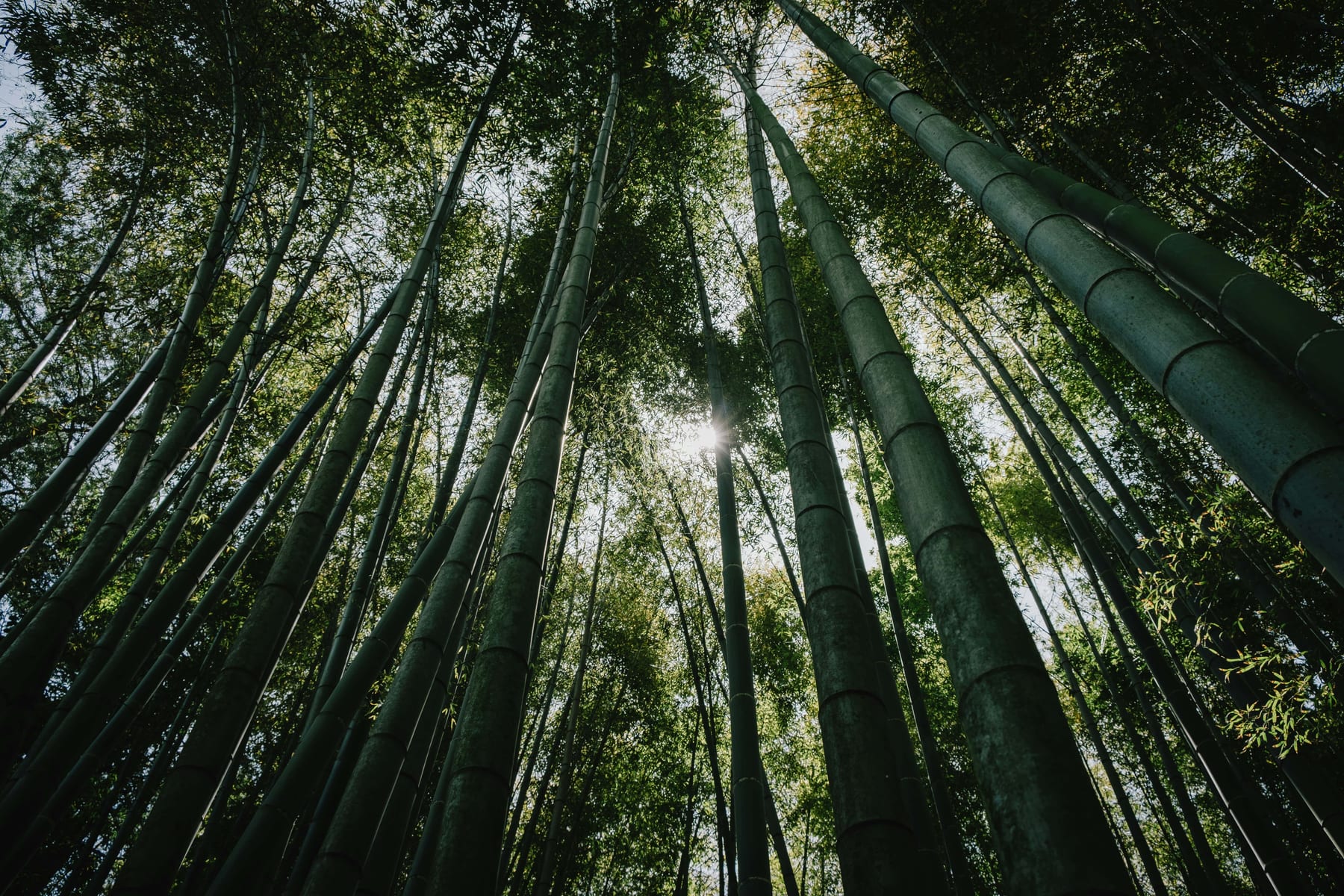
The path between them passes through bamboo and mixed forest. Along the way, the colour changes in gradients that flatten out by the time you reach the main temple gates. It is one of the quieter autumn walks near Tokyo, and one of the most rewarding.
Kamakura's late colour means it works when everywhere else has already peaked. Your guide plans for this.
What changes when you travel with a private guide in autumn
Autumn is the season in Japan where a private guide makes the most practical difference. The colour window is short. Furthermore, the forecast changes daily, and the most popular viewpoints fill up on peak weekends. A guide who tracks the koyo forecast and understands which sites face which direction in the morning light is worth more in November than at any other time of year.
Beyond the colour
Most autumn visitors are chasing colour. A guide, however, helps you understand what you are looking at alongside it. Why is a particular shrine positioned where it is? What does the cedar forest around it mean in terms of age and history? How did the landscape look before it was planted? The colour is the occasion. The context is what makes the day worth remembering.
Autumn travel in brief Nikko peaks late October to mid-November. Hakone and Tokyo parks peak mid-to-late November. Kamakura peaks late November into December. In addition, book accommodation early for November weekends, which fill months in advance. Weekday visits to all three destinations are noticeably quieter than weekends.
Private autumn tours from Tokyo
Nikko, Hakone, Kamakura. Timed around the koyo forecast, structured around your pace, and built to be in the right place when the colour peaks. We adjust the day around conditions, not around a fixed schedule.
Frequently asked questions
When is the best time to see autumn foliage in Japan near Tokyo?
Autumn colour around Tokyo typically peaks between mid-November and early December. Nikko, being higher in altitude, usually peaks first, around late October to mid-November. Hakone and Kamakura follow, with peak colour arriving in mid-to-late November and late November respectively. The window varies by up to two weeks depending on the year, so travelling with a private guide who monitors conditions in real time gives you the best chance of arriving at peak colour.
What is koyo in Japan?
Koyo is the Japanese word for the autumn colour season, when deciduous trees, particularly Japanese maple, ginkgo, and beech, turn shades of red, orange, and gold. The phenomenon is tracked closely in Japan, with daily forecast updates published from late September onward. Like cherry blossom season, koyo is a major cultural event, and the most celebrated destinations attract large crowds at peak weekends.
Where is the best place to see autumn leaves near Tokyo?
Nikko is the most dramatic autumn destination reachable from Tokyo, combining ancient cedar forest with hillside shrines, the Kegon waterfall, and dense maple groves. Hakone offers autumn colour framed by Lake Ashi and Mount Fuji on the horizon. Kamakura provides a quieter, more intimate experience with temples surrounded by Japanese maple, peaking later in the season. All three are reachable by private car in under two hours from central Tokyo.
Is autumn a good time to visit Japan?
Autumn is one of the two best times to visit Japan. The heat and humidity of summer are gone, temperatures are comfortable for walking, and the light is clear and low, which makes everything look better than at any other time of year. Mount Fuji views from Hakone are more reliable in autumn and winter than in spring or summer. The main challenge is that popular destinations are crowded on peak weekends, which is one of the strongest practical reasons to travel with a private guide who can time the visit on weekdays or in the early morning.