
What to Wear in Japan: A Season-by-Season Packing Guide
Dressing well in Japan means navigating four distinct climates, centuries-old cultural expectations, and a country that rewards thoughtful preparation.
Knowing what to wear in Japan depends almost entirely on when you travel. Within a two-week itinerary you may find yourself walking stone temple corridors in the morning, seated at a counter restaurant at noon, and hiking forested trails in the afternoon. The climate shifts by altitude, by prefecture, and by the specific week you arrive. Packing well is not a question of fashion, but of attention.
Fortunately, Japan rewards a thoughtful, edited bag. The transport infrastructure is precise, convenience stores stock most small essentials, and there is real pleasure in moving through it with less. This guide covers what you actually need for each season, the dress expectations that matter, and the practical details that most guides skip.
Spring (March to May)
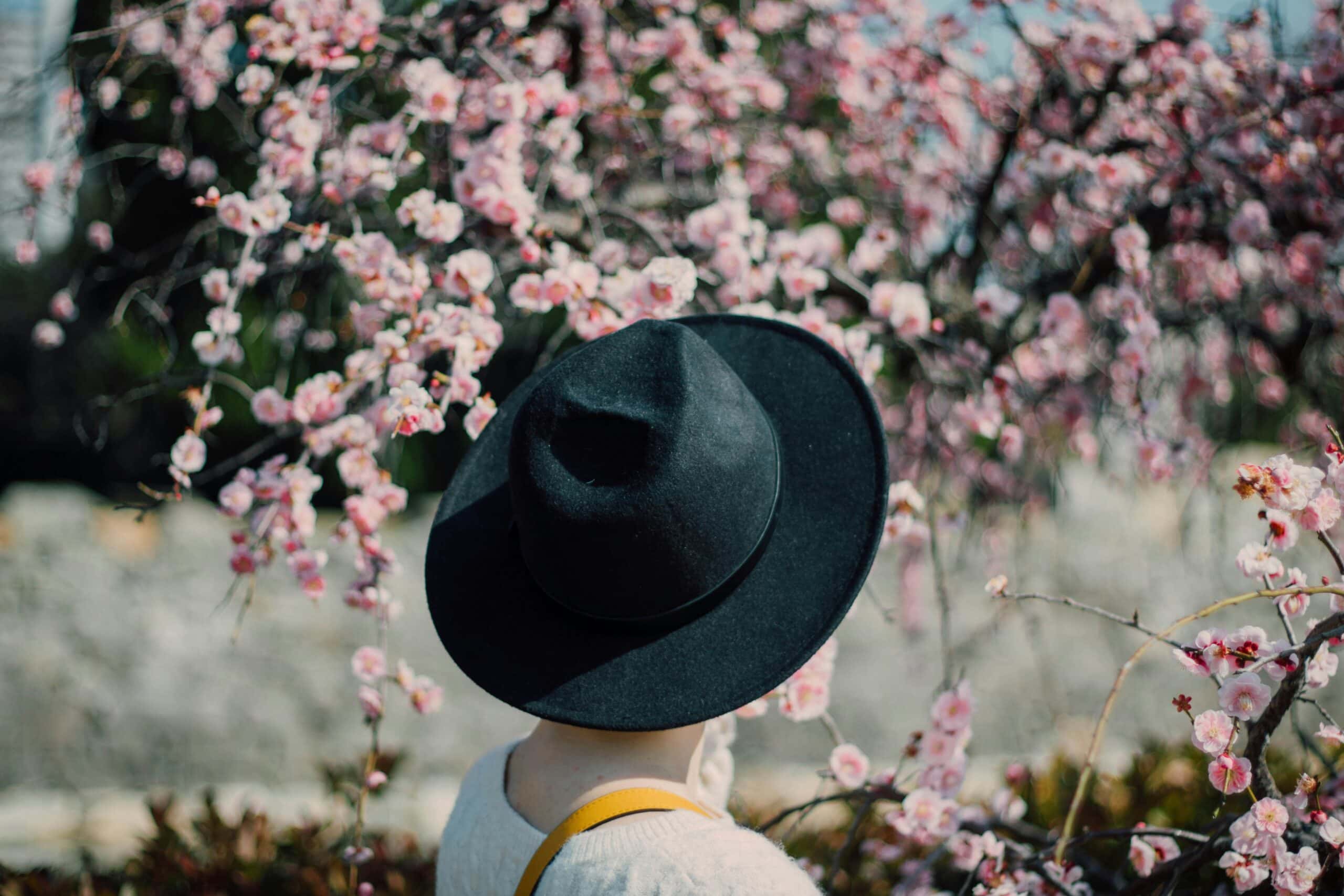
Spring in Japan is the season most travellers picture when they book: pale pink blossoms over stone paths, light jackets, the air warm enough to sit outside. The reality is more variable, and that variability makes layering the core skill of a spring visit.
March and early April
March opens cold, often reaching single-digit mornings in Tokyo and lower still in Kyoto’s temple districts, where shade holds the chill. By late March, cherry blossoms begin their northward progression and crowds arrive with them. However, temperatures remain unpredictable day to day. A morning that calls for a wool jumper can end as a mild afternoon in shirtsleeves.
April is the most forgiving month. Daytime temperatures settle between 14 and 20 degrees across most of Honshu, the light is long and clear, and rain tends toward brief showers rather than full grey days. Lightweight trousers, a cotton or linen shirt, and a medium-weight jacket cover most situations. The jacket ties around the waist or folds into a day bag when not needed.
May
May edges toward summer. By mid-month, Tokyo climbs into the mid-20s and the first humid days appear. The Golden Week holiday brings significant crowds to every major site. As a result, light and breathable fabrics take priority. A thin rain layer handles the occasional afternoon downpour without overheating.
Spring in Japan asks you to dress for two seasons at once: the morning still belongs to winter; by afternoon you are grateful you packed light.

Summer (June to August)
Japanese summer is defined less by heat alone than by humidity. From mid-June, when the tsuyu rainy season arrives, the combination of high temperatures and moisture makes certain fabrics feel unwearable within an hour of stepping outside. Synthetics and heavy weaves trap heat. Natural fibres breathe. This single distinction drives every packing decision in summer.
What to wear
Linen, light cotton, and technical moisture-wicking fabrics are the practical options. Loose-fitting shirts and trousers in neutral tones cope well across the environments you will encounter: air-conditioned museums at the colder end, outdoor temple grounds and festival streets at the warmer. A light layer for interiors is also useful, since Japanese air conditioning is aggressive and some restaurants keep their dining rooms genuinely cold.
Yukata season
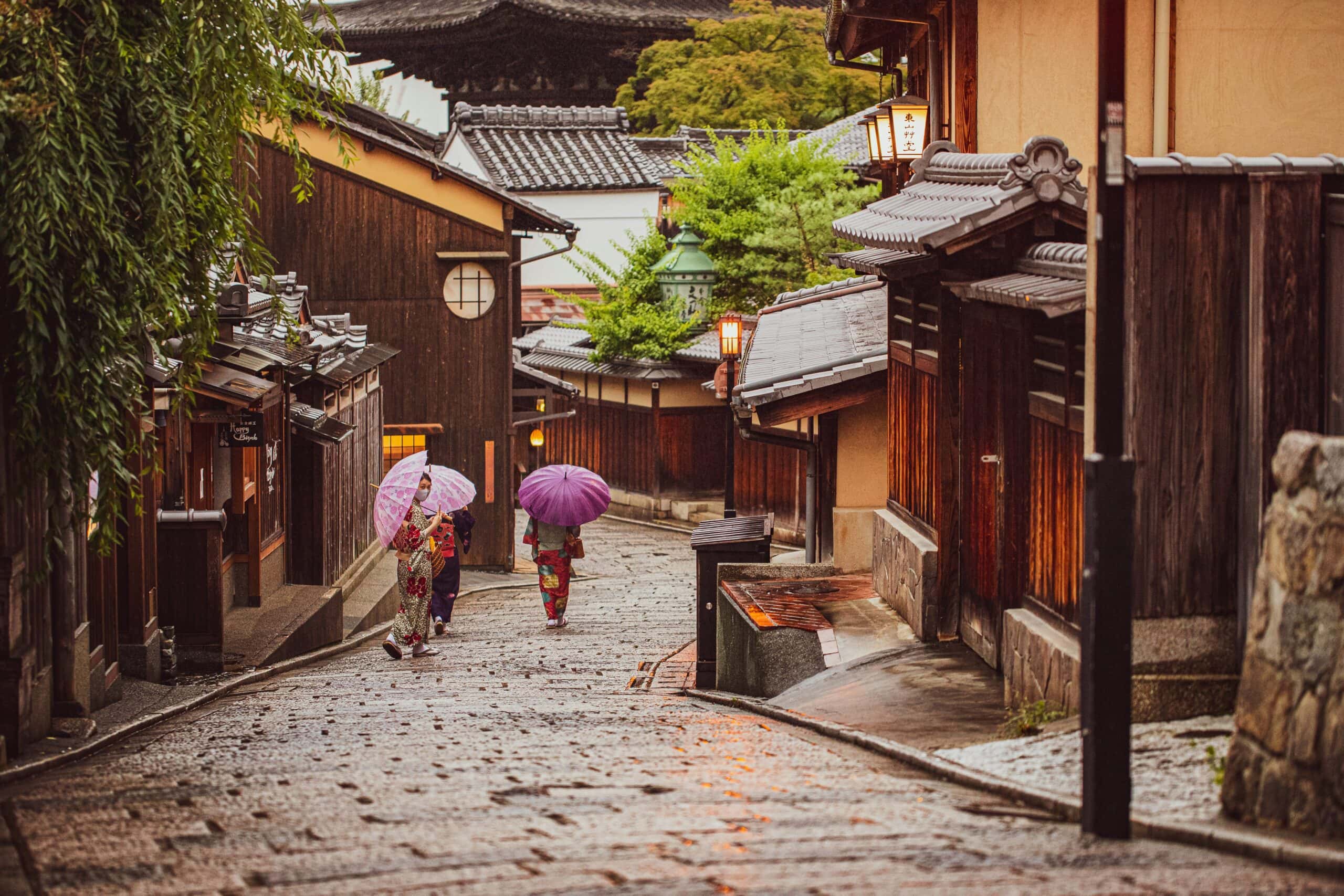
June and July bring the summer festival season, when yukata are worn widely. A yukata is a casual cotton kimono associated with fireworks festivals, open-air markets, and the summer evenings that Japan does particularly well. Many ryokan provide yukata for guests to wear within the inn and to nearby evening events. Wearing one is a cultural participation, not a performance. If your inn provides them, wear them.
August
August in the cities is punishing in full sun. Lightweight hats, portable fans, and a small reusable water bottle become daily necessities. Many travellers find that scheduling strenuous outdoor activities for early morning, then shifting to shaded or air-conditioned spaces between noon and four, makes the itinerary considerably more comfortable.


Autumn (September to November)
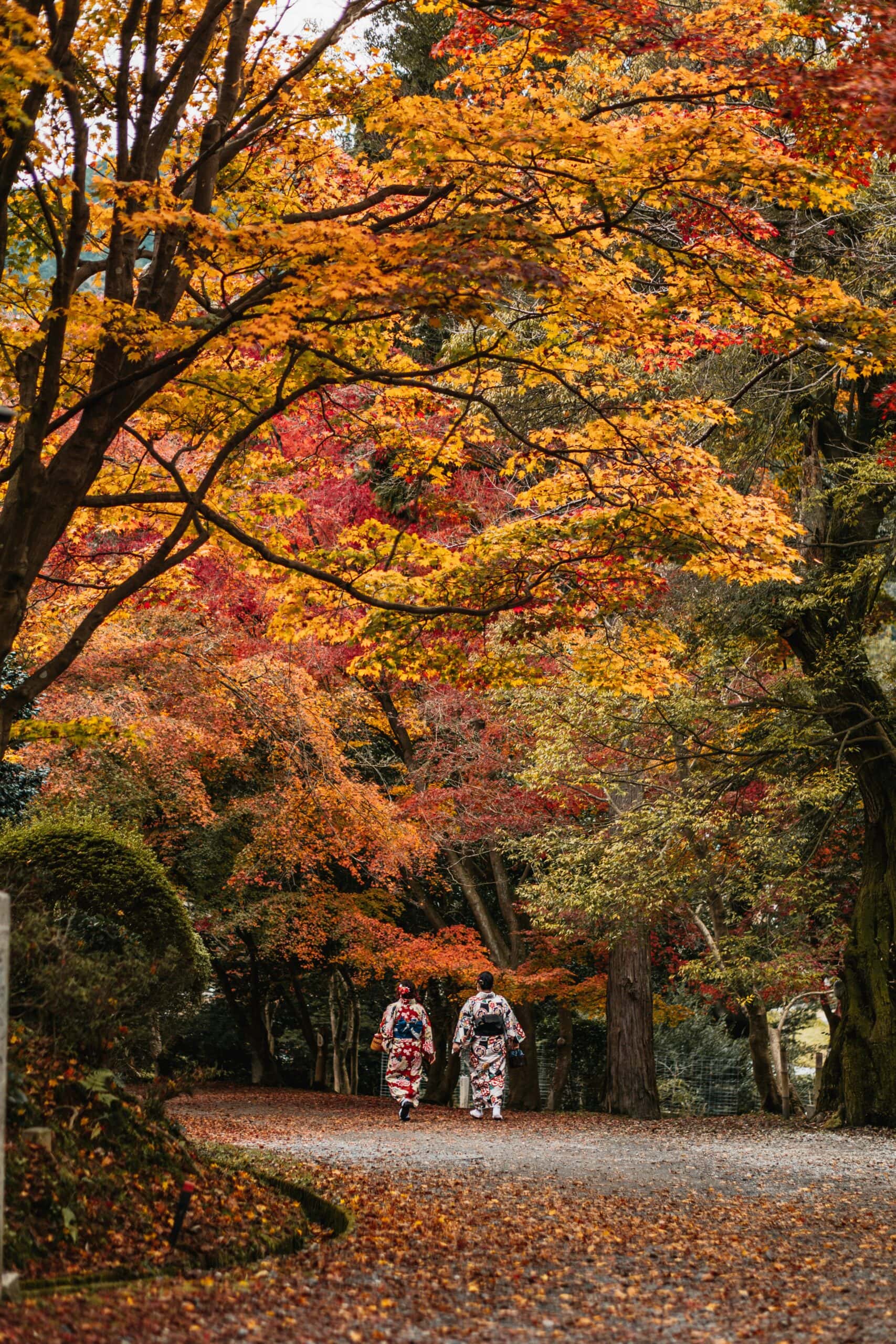
Autumn is widely considered the most comfortable season to visit Japan, and it is also the easiest to dress for. September still carries summer’s warmth, but by October the air shifts to something clearer and more temperate. November brings the koyo season, when maple forests in Nikko, Arashiyama, and Hakone turn amber and crimson, with daytime temperatures between ten and eighteen degrees across most of Honshu.
Layering for October and November
A structured wardrobe of mid-weight layers handles these months well. Specifically, a light wool or merino base, one or two versatile mid-layers, and a compact outer shell cover the full temperature range without requiring a large bag. Deeper neutrals, navy, olive, and warm brown feel at home against the season’s landscape and photograph well without competing with the foliage.
Mountain environments
The main practical challenge of November is the variability of higher-altitude sites. Nikko sits at altitude and can be genuinely cold after dark. Hakone’s open-air sites face wind at higher elevations. By contrast, the valley floors of Kyoto and Tokyo remain mild enough for a jacket and light jumper. For this reason, checking elevation for each specific site, rather than relying on city-level forecasts, saves real discomfort.
Autumn asks almost nothing of you in terms of preparation, and rewards that ease with some of the finest light Japan offers all year.
Winter (December to February)
Japan’s winter divides clearly by geography. Tokyo and Kyoto are cold but generally dry, with occasional frost and rare street-level snow. Nikko, the Fuji Five Lakes region, and the mountain towns of Nagano and Yamagata receive significant snowfall and require a different category of preparation entirely. Packing for urban Tokyo in January is not the same as packing for Kawaguchiko.
Cities
In Tokyo and Kyoto, a quality wool coat, warm mid-layers, and lined trousers are sufficient for most days. Japanese winters are crisp rather than brutal in the lowlands, and restaurants, museums, and transport are consistently well-heated. The cold is primarily an outdoor phenomenon, and moving between warm interiors means exposure is rarely prolonged.
Mountain destinations
For itineraries that include the Fuji Five Lakes or any northern mountain destination, the approach shifts considerably. Snow boots or waterproof shoes with good grip become necessary around lakesides and mountain paths. A thermal base layer under wool mid-layers and a wind-resistant outer shell covers the full range. Hats, gloves, and a neck wrap are worth including rather than purchasing on arrival, though Japan’s outdoor retailers carry everything if needed.
Onsen
One specific context worth noting: onsen bathing is central to winter travel in Japan. The temperature contrast between the cold outdoor air and the hot water is part of the experience. Access requires only the cotton robe or yukata provided by the ryokan. As a result, your luggage does not need to accommodate anything for this.

Dress Codes Worth Knowing
Temples and Shrines
The general principle is tidiness and modesty. Shorts are often considered too casual at Buddhist temples and may draw quiet disapproval at older, traditionally managed sites. Similarly, sleeveless tops and athletic clothing are best left for outdoor activities. A lightweight scarf or shawl carried in a day bag resolves both concerns at any site and takes up almost no space.
Shoes are removed at the entrance to many temple buildings, at ryokan entranceways, at most traditional restaurants, and at some private residences. Consequently, footwear that slips on and off without effort is not merely convenient: it shows consideration for the spaces and their conventions.
Upscale Restaurants
Japan’s finest restaurants range from counter omakase in a single basement room to multi-storey kaiseki houses with private tatami rooms. Dress expectations vary accordingly. As a general guide, the level of attention given to the food reflects the level of attention expected in dress. Smart casual, meaning no athletic wear, no visible logos, and clean pressed clothing, works at any serious restaurant. A blazer or structured jacket for dinner adds flexibility and signals respect for the setting.
Tatami-room dining means low tables and cross-legged or kneeling positions for a full meal. For this reason, comfortable and non-restrictive trousers matter more than most guests anticipate. Tight jeans in particular become uncomfortable over a long dinner on the floor.
Onsen
The protocol is straightforward: you enter without clothing, and the small towel provided is for wiping, not covering. Tattoos remain a practical issue at many traditional onsen, which maintain prohibitions against visible ink. If this applies to your group, it is worth confirming the policy with each facility in advance. Alternatively, private family baths, known as kashikiri, are available at many ryokan and remove this constraint entirely.
In Japan, how you present yourself in a space is understood as a form of acknowledgment of that space. The standard is not formal, but it is considered.
Practical Notes on Packing
What to buy on arrival
Japan’s convenience stores, pharmacies, and department stores are extraordinarily well-stocked. Toothpaste, sunscreen, over-the-counter medications, and most travel essentials are available in every city and most smaller towns. As a result, packing a minimum and supplementing on arrival is a reliable strategy, particularly for items that are bulky or uncertain in terms of need.
Luggage forwarding
Takkyubin forwarding is one of Japan’s most useful services for travellers. Most courier companies and hotels transport your suitcase between cities overnight for a modest fee. This means you can travel between destinations with only a day bag and reunite with your luggage at your next ryokan or hotel. For itineraries covering three or more cities, the reduction in daily friction is considerable.
Suitcase or soft bag?
For slow travel between two or three cities with generous check-in times, a roller suitcase is perfectly manageable. For itineraries with tight train connections or frequent movement between smaller destinations, a bag you can carry up stairs and through crowded platforms independently is considerably more practical.
A trip designed around the season you want to experience
Every Haven Japan itinerary is built around the specific weeks you travel, the places that matter to you, and the details that make the difference between a good trip and one you remember for years.
Inquire about your tripFrequently asked questions
Can I wear shorts in Japan?
Shorts are perfectly acceptable in Japan during summer months in cities and at casual outdoor sites. They are generally not appropriate at religious sites such as temples and shrines, and are considered too informal for upscale restaurants. Lightweight linen or chino trousers are a practical alternative that works across most contexts.
Do I need to cover my shoulders at temples?
Requirements vary by site. Many Shinto shrines have no strict dress code beyond general tidiness. Buddhist temples, particularly those with active monastic communities, often ask visitors to cover their shoulders and knees. Carrying a lightweight scarf or shawl resolves the issue at any location without adding meaningful weight to your bag.
What shoes work best for Japan?
The combination of significant daily walking distances and frequent shoe removal at traditional restaurants, ryokan, and some cultural sites makes footwear one of the most important packing decisions. Well-worn walking shoes or low-profile sneakers with easy slip-on entry handle both demands comfortably. Avoid brand-new shoes and heavy hiking boots unless the itinerary specifically calls for mountain terrain.
Should I pack a suitcase or a backpack for Japan?
This depends on the pace and structure of your trip. For a stay centered in Tokyo or Kyoto with minimal inter-city movement, a roller suitcase works well, particularly because train stations have coin lockers and many hotels offer luggage forwarding. For itineraries with frequent moves between destinations, a versatile soft-sided bag or structured backpack is considerably easier to manage on escalators, narrow platforms, and in smaller ryokan entranceways.