

Where to See Mount Fuji
Five viewpoints within a day trip of Tokyo, each offering a completely different frame for the mountain.
Mount Fuji is one of the most recognisable shapes on earth, yet most visitors to Tokyo never get close enough to see it properly. That is not a question of distance. It is a question of knowing where to stand. These five viewpoints are all reachable as a day trip, and each one frames the mountain in an entirely different way.
1. Hakone: Reflected in Lake Ashi
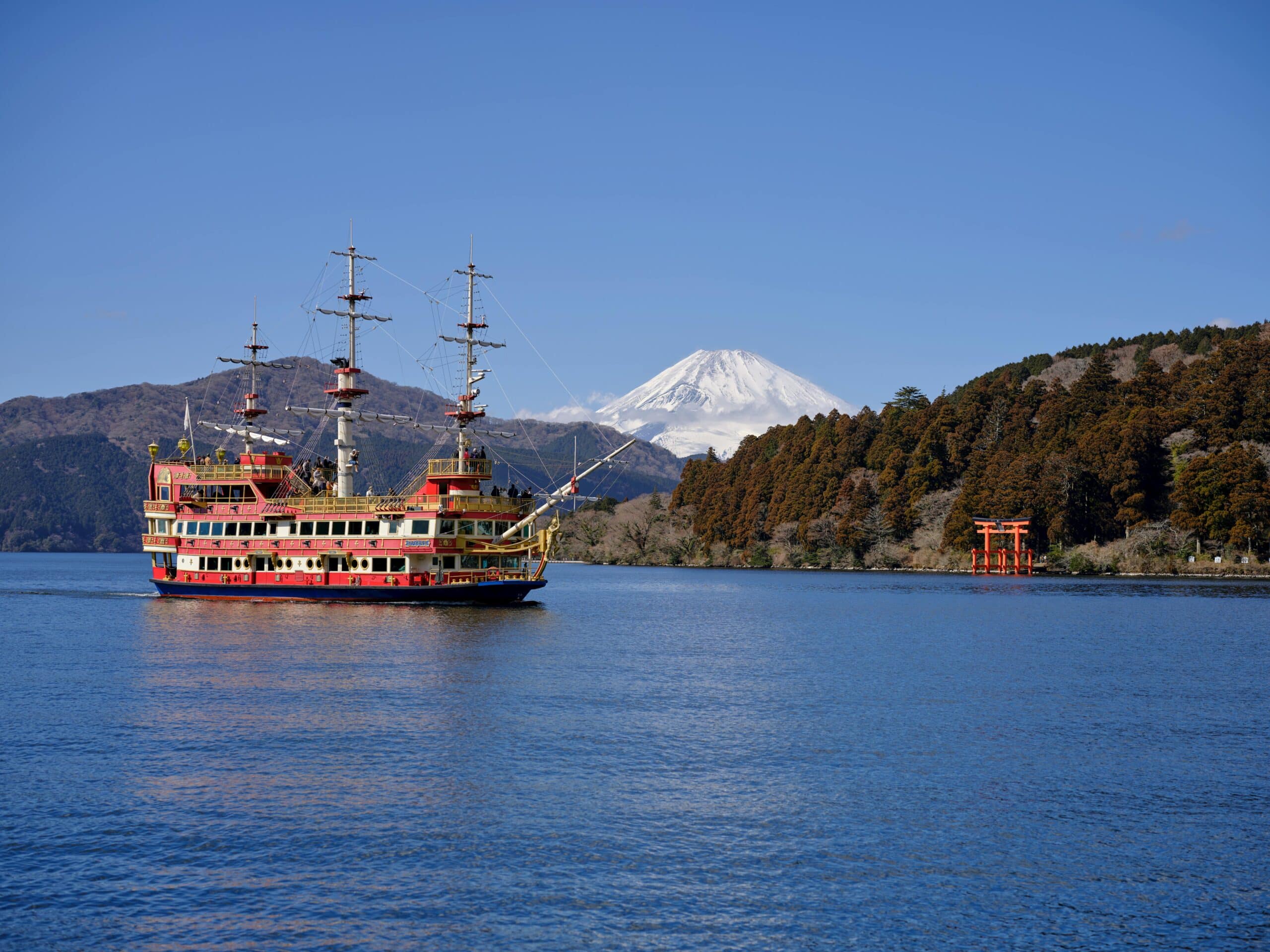
Hakone sits roughly 90 minutes west of Tokyo and remains the most popular destination for seeing Mount Fuji without climbing it. The draw is Lake Ashi, a volcanic crater lake where the mountain appears above the far shoreline on clear mornings, framed by forest and, in season, by the red torii gate of Hakone Shrine standing in the shallows at the water’s edge.
Hakone Shrine Torii
The lakeside torii gate at Hakone Shrine is one of the most photographed spots in the entire Fuji viewing circuit. Arriving before 8am gives you the gate and the mountain largely to yourself. By mid-morning the path fills up. The reflection of both gate and peak in the calm surface of the lake is best on still, overcast mornings rather than bright midday sun.
Hakone Ropeway
The Hakone Ropeway, running above the volcanic landscape of Owakudani, gives an elevated view of Fuji from the east. On a clear day the mountain appears above the sulphur vents and jagged ridgeline. The gondola stops at Ubako and Owakudani stations, both offering unobstructed northward views. This is the highest accessible vantage point in the Hakone area without hiking.
Lake Ashi Cruise
The sightseeing cruise across Lake Ashi offers a perspective that no land-based viewpoint can match: Fuji framed by open water, with the Hakone hills receding on either side. The cruise runs regularly throughout the day between Hakone-machi and Togendai, and the upper deck of the boat gives an uninterrupted sightline. Weather is the variable that matters most here.
2. Lake Kawaguchi: The Classic Spring View
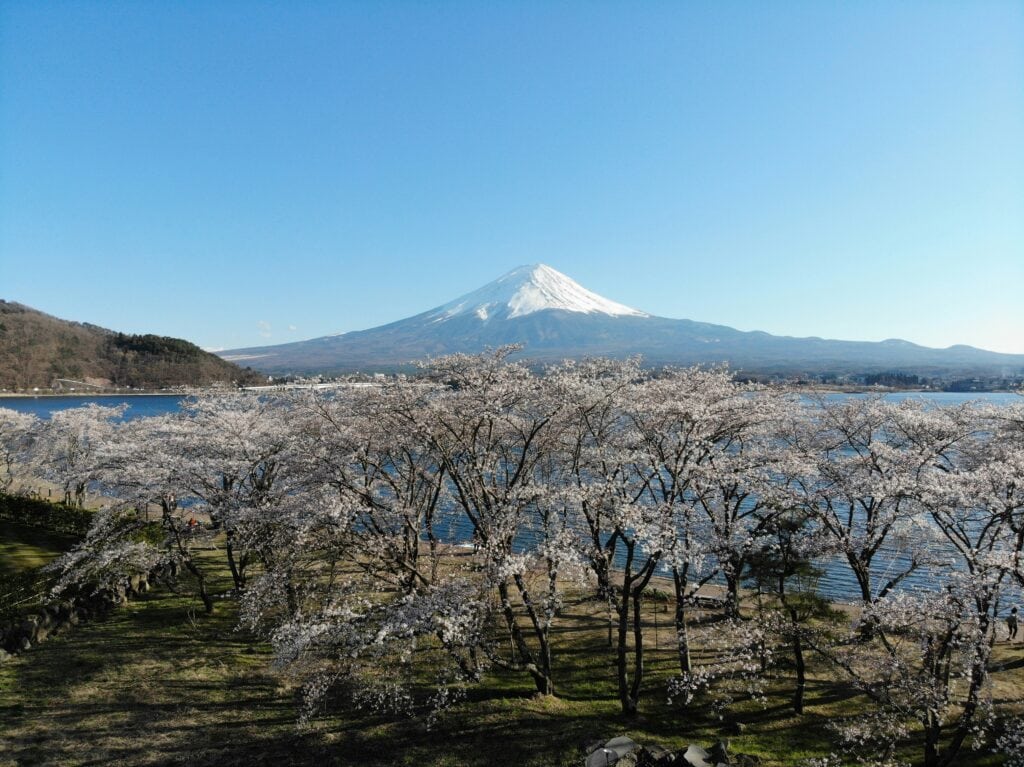
Lake Kawaguchi is the most accessible of the Fuji Five Lakes and the one that produces the photographs most people associate with Japan in spring. The northern shore of the lake, particularly around Oishi Park, faces south directly toward the summit. On clear mornings the mountain is reflected in the water, and from late March to mid-April cherry trees line the lakefront path, adding a foreground that turns the view into something almost implausible in its beauty.
Oishi Park
Oishi Park on the northern shore is the most straightforward viewing point at Lake Kawaguchi. The park is wide open, the sightline to Fuji unobstructed, and the lake sits quietly between them. Lavender blooms here in early summer, kochia grass turns red in autumn, and cherry trees provide the spring equivalent. The park is free to enter and has a cafe and small gift shop at the edge.
Chureito Pagoda
The Chureito Pagoda, a five-storey structure belonging to Arakura Sengen Shrine, requires a short climb of around 400 steps but repays the effort with one of the most iconic compositions in Japanese photography: a vermilion pagoda in the left foreground and Mount Fuji filling the sky behind it. In cherry blossom season, pink trees frame the steps on the way up. The peak crowd period is during sakura, but the view itself is worth the visit at any time of year.
Kachi Kachi Ropeway
The Kachi Kachi Ropeway rises from the eastern shore of Lake Kawaguchi to a viewing platform on Tenjo Mountain. From the top, the lake lies below and Fuji dominates the horizon. This is a good option when the lakefront is crowded, as the elevated perspective gives a different relationship between the water and the mountain.
3. Enoshima and Kamakura: Fuji from the Coast
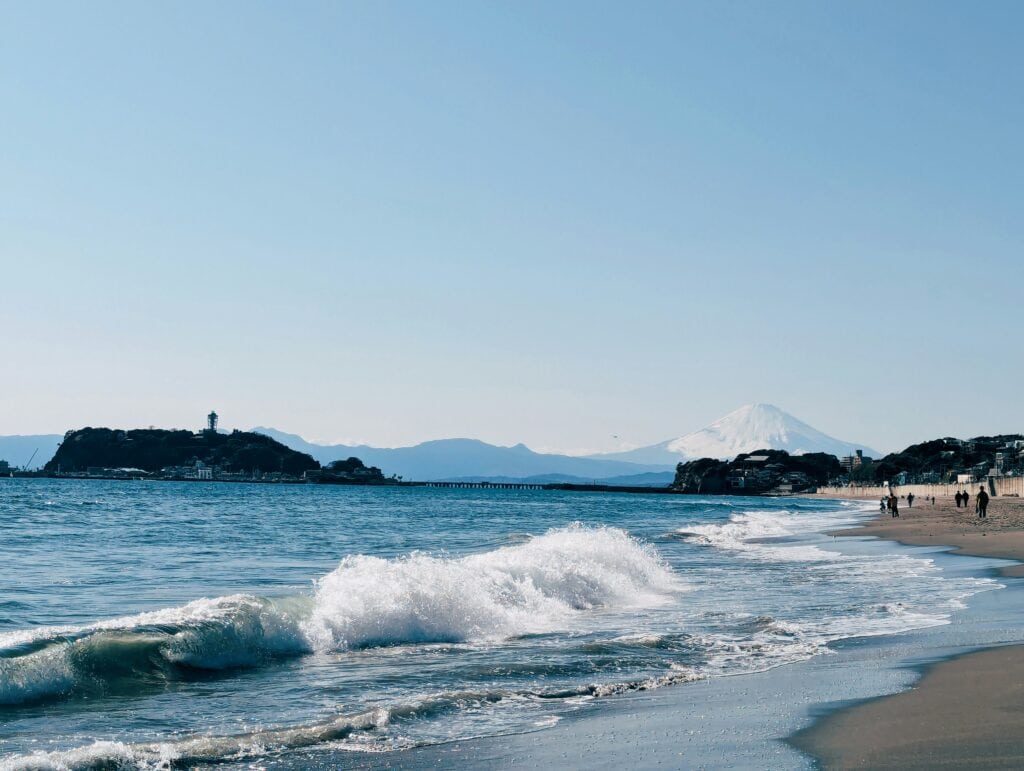
Enoshima Island and the Kamakura coastline, roughly one hour south of Tokyo by train, offer something none of the inland viewpoints can: Mount Fuji seen across the Pacific Ocean. On clear winter and early spring mornings, the mountain is visible from the beaches and coastal headlands along Sagami Bay, appearing above the horizon as a distant white cone with the sea in front of it. It is a less reliable sighting than Hakone or Lake Kawaguchi, but when the conditions align, it is one of the most unusual views of the mountain in Japan.
Inamuragasaki Park
Inamuragasaki, a small headland between Kamakura and Enoshima, is the most consistent coastal viewpoint for Fuji in the area. The promontory extends slightly into the bay, giving an unobstructed sightline to the northwest. Sunrise here in winter, with the mountain catching first light while the sea is still dark, is a memorable scene. The park itself is modest in size, easily walkable from Inamuragasaki Station on the Enoden line.
Shichirigahama Beach
The long curve of Shichirigahama Beach runs between Kamakura and Enoshima and faces directly toward Fuji on a clear day. This is where the classic coastal photograph is taken: sea, beach, island, and mountain in a single frame. The view is best from the higher end of the beach near the road and is most reliable from November through March when the air is dry.
Enoshima Sea Candle
The Sea Candle lighthouse observation tower on Enoshima Island gives an elevated 360-degree view across the bay. On clear days Fuji appears clearly to the northwest. The tower is accessed via the island’s main shopping street and a series of escalators or steps through the cave complex. Entry to the tower itself requires a separate ticket from the island entrance.
4. Tokyo: Urban Views on a Clear Morning
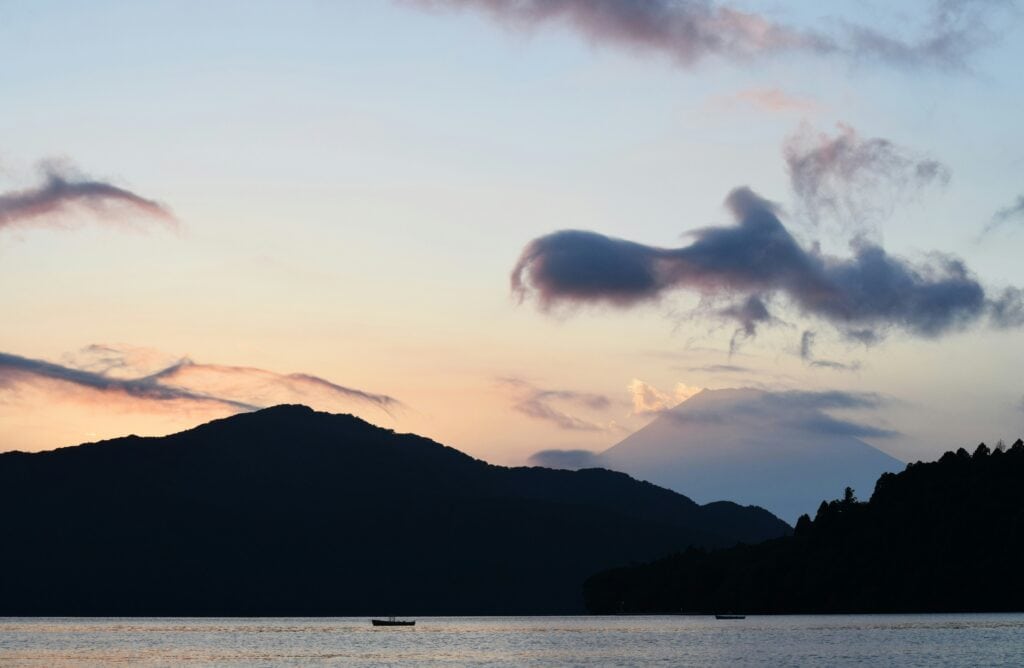
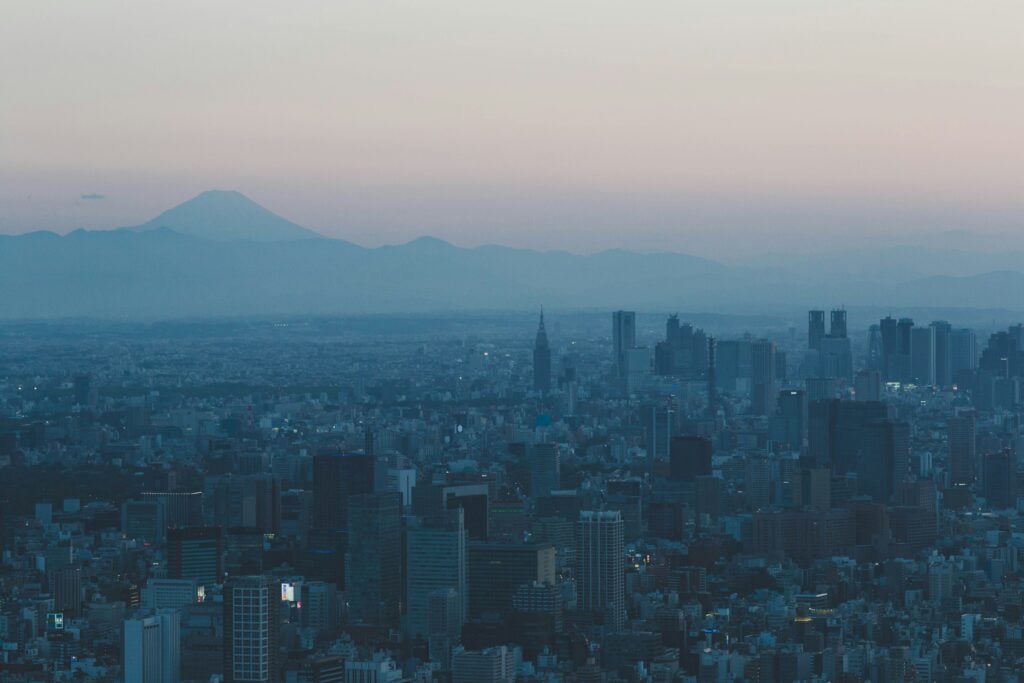
On days when the air is dry and the sky genuinely clear, usually in the colder months, Mount Fuji is visible from several elevated points within Tokyo itself. The mountain appears as a small but unmistakable white shape on the western horizon, catching the light above the urban sprawl. These views are atmospheric rather than dramatic, and their interest lies in the contrast: one of the world’s great cities with one of the world’s most recognisable mountains visible behind it.
Tokyo Skytree
The Tembo Deck at Tokyo Skytree, at 350 metres, gives a wide westward panorama across the city. On clear winter mornings Fuji is visible on the horizon from here, with the towers and rooftops of central Tokyo in the foreground. The view requires a calm, dry morning and is best from late November through February. The Skytree observatory opens at 10am, so for maximum clarity visit early in the day before haze builds.
Bunkyo Civic Center
The 25th-floor observatory at Bunkyo Civic Center is free of charge and open to the public, making it the most accessible elevated viewpoint in the city. The views south and west are particularly good, and Fuji is visible on clear days from the western windows. This is a practical option for visitors already spending a day in central Tokyo who want to include Fuji in their itinerary without making a separate day trip.
Planning Your Visit: A Few Things to Know
Weather is the only variable that matters
Every viewpoint on this list is undermined by cloud cover. Fuji generates its own weather and can disappear behind cloud at any time of day, even when the surrounding sky is blue. Checking a dedicated Fuji weather forecast the evening before, rather than a general Tokyo forecast, will give a more accurate indication of visibility at the summit and the nearby viewpoints.
Morning light is more reliable than afternoon
In most seasons, the clearest views are in the first two to three hours after sunrise. As the day warms, haze builds over the Kanto Plain and the mountain loses definition even when technically still visible. Arriving at Lake Kawaguchi or Hakone before 8am consistently produces better results than arriving at noon. For coastal views from Kamakura, the same logic applies.
Winter and early spring are the best seasons
The mountain is snow-covered from November to May and the air is at its clearest between December and March. Late March to early April adds cherry blossoms to the foreground at several viewpoints, making it the single most photogenic window. Summer visibility is poor due to the rainy season and subsequent haze. Autumn is excellent once the typhoon season ends in October.
No special equipment or planning is required
Unlike the climbing season, which requires preparation and a reasonable level of fitness, simply viewing Fuji from the surrounding area requires nothing more than a train ticket and an early start. A private day trip with a guide allows for flexibility across multiple viewpoints in a single day, which significantly improves the odds of a clear sighting.
See Mount Fuji on Your Terms
Haven Japan arranges private day trips to Hakone, Lake Kawaguchi, and the Kamakura coast. Your guide plans the route around the forecast, the season, and your schedule.
Explore private day tripsFrequently Asked Questions
What is the best place to see Mount Fuji from?
The most iconic view is from Lake Ashi in Hakone, where the red torii gate of Hakone Shrine frames the mountain across the water. Lake Kawaguchi in the Fuji Five Lakes region also offers outstanding views, particularly in spring when cherry blossoms line the northern shore. Both require roughly 90 minutes to two hours from central Tokyo. For those already in the city, the observation decks at Tokyo Skytree and the free Bunkyo Civic Center provide surprisingly clear views on calm, cloud-free mornings.
Can you see Mount Fuji from Tokyo?
Yes, on clear days Mount Fuji is visible from several elevated points in Tokyo. The observation deck of Tokyo Skytree offers one of the best city-level views, as does the free 25th-floor observatory at Bunkyo Civic Center. The mountain is most visible in winter and early spring when the air is dry and the summit is snow-capped. Summer haze and cloud cover make sightings unreliable between June and September.
How far is Mount Fuji from Tokyo by train?
Direct access to the Fuji Five Lakes area takes around two hours from Shinjuku Station, either by highway bus to Kawaguchiko or by train via Otsuki. Hakone, which offers views of Fuji across Lake Ashi, is around 80 minutes from Shinjuku on the Romancecar express. Enoshima and Kamakura, where Fuji is visible from the coast on clear days, are about one hour from Tokyo Station on the JR Yokosuka Line. A private day trip with a driver removes the transfers and allows for a more flexible itinerary.
What time of year is best to see Mount Fuji?
Winter and early spring offer the clearest skies and the most dramatic views, with the summit fully snow-covered from November through May. Late March to early April adds cherry blossoms at Lake Kawaguchi and around Lake Ashi in Hakone, creating the most photographed combination. Summer is the official climbing season but visibility from a distance is poor due to cloud and haze. Autumn provides crisp air and good visibility, with red foliage in the surrounding forests adding colour to the foreground.