

Escape the Heat: Summer Day Trips from Tokyo
Hakone, Kamakura, and Nikko each run significantly cooler than central Tokyo from June through September. Here is where to go and how to make the most of the summer season.
Tokyo in July and August regularly reaches 35 degrees Celsius, with humidity that makes it feel considerably hotter. The destinations within reach of the city are not interchangeable. Hakone sits at altitude with mountain air and lake views. Kamakura sits on the coast with sea breezes and shaded temple grounds. Nikko climbs into a forested range where temperatures run ten degrees or more below the city. Knowing which suits your interests before you travel makes all the difference.
Hakone: Cool Mountain Air and Lake Ashi
At an elevation that keeps summer temperatures between 22 and 26 degrees Celsius, Hakone offers a genuinely different climate from central Tokyo. Approximately 90 minutes from the city, it combines mountain scenery with a range of experiences that suit different interests and energy levels. The combination of cooler air and varied terrain makes it one of the most effective escapes from the urban heat.
Lake Ashi and the Sightseeing Cruise
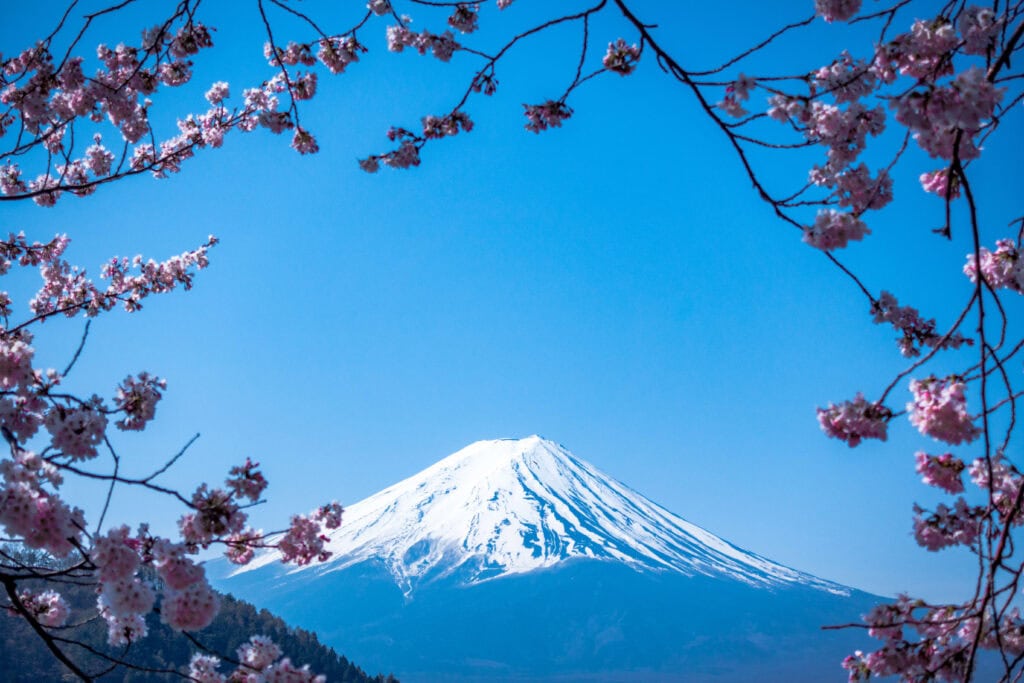
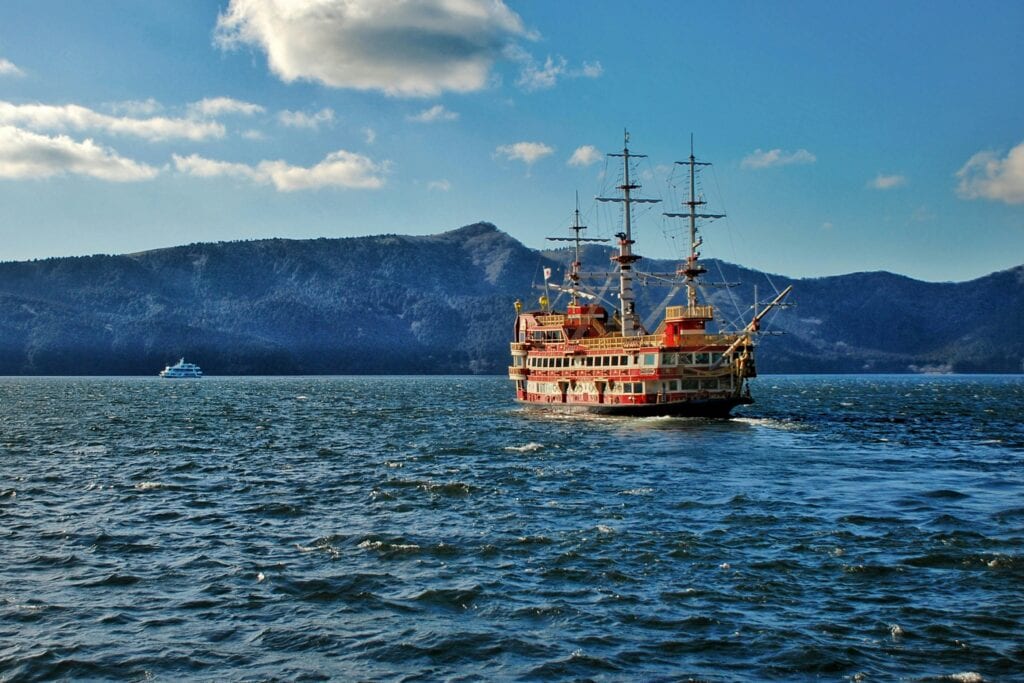
Lake Ashi sits at the centre of the Hakone caldera, its surface often catching a breeze that makes time spent on or near the water noticeably refreshing. The Hakone Sightseeing Cruise crosses the lake between Togendai, Moto-Hakone, and Hakone-machi, passing the red torii gate that rises from the water near the southern shore. On clear days, Mount Fuji appears above the far ridge. In summer the boat is a natural way to spend time comfortably without sustained sun exposure.
The Hakone Ropeway
The ropeway crosses the volcanic Owakudani valley, where active sulphurous vents and crater lakes form one of the more dramatic landscapes in the Hakone area. The altitude and movement through the air make the ropeway itself a cooling experience. Views of the Hakone range and, in clear conditions, of Mount Fuji to the northeast reward the journey even on days when clouds obscure the summit.
Hakone Open-Air Museum
The Open-Air Museum sits in a mountain setting between Chokoku-no-Mori and Miyagino stations on the Hakone Tozan Railway. Its permanent collection of sculpture is displayed across landscaped grounds that capture whatever mountain breeze is moving through the valley. The indoor galleries and the Picasso Pavilion offer air-conditioned relief if midday heat becomes uncomfortable, making the museum well suited to a full morning of exploration.
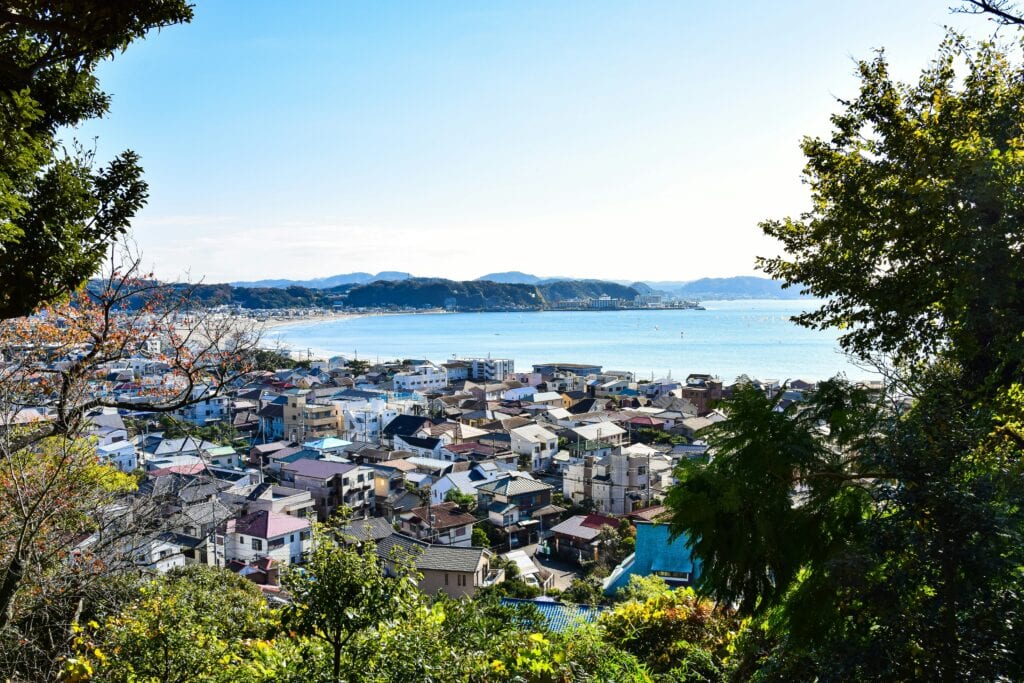
Kamakura: Coastal Breeze and Ancient Temples
Kamakura sits on the coast of Sagami Bay, roughly one hour south of Tokyo. Its summer temperatures of 27 to 30 degrees are higher than those at Hakone or Nikko, but the sea breeze that moves through the town and its elevated temple grounds provides consistent relief. The town’s compact historic core, with most major sites within walking distance of the station, allows for a morning of culture followed by time near the water.
The Great Buddha and Kotoku-in
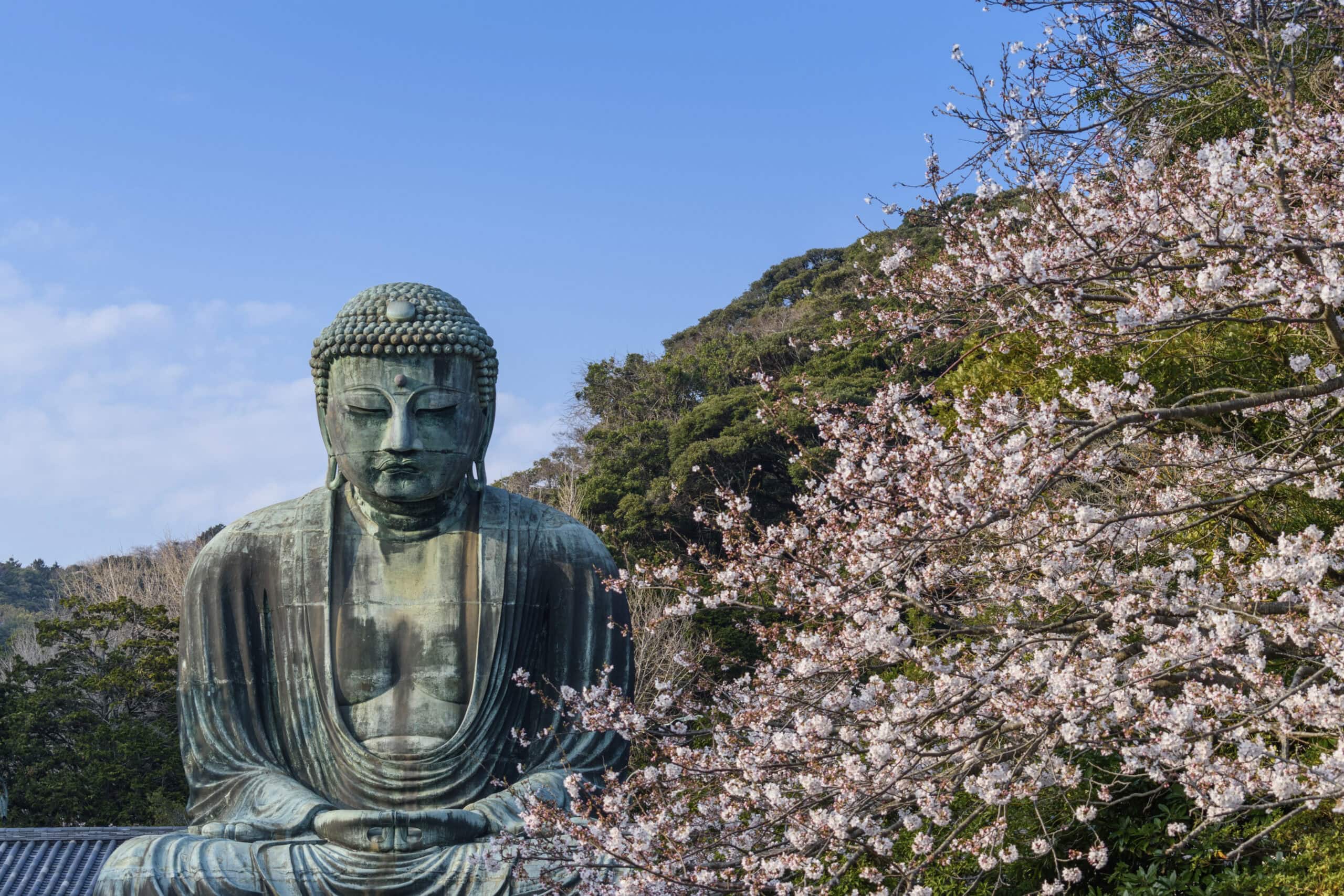
The bronze Great Buddha at Kotoku-in temple is 13 metres tall and sits in an open courtyard that captures the prevailing sea breeze from the south. The approach through pine woodland provides shade on the walk in, and the grounds themselves are quieter at the southern end of the site away from the main entrance. Visiting in the early morning, before the coach tours arrive from Tokyo, gives the statue a composure that is harder to find later in the day.
Hasedera Temple
Hasedera occupies a hillside position with views across the bay toward Enoshima Island. The garden terraces on the upper level are often cooler than the streets below due to the elevation and the trees that frame the main hall. The carved wooden Kannon figure in the main hall is one of the largest in Japan. The combination of sea views, garden detail, and accessible cultural content makes Hasedera well suited to a morning visit.
Komachi Street and the Coast
The covered shopping street leading from Kamakura Station toward Tsurugaoka Hachimangu Shrine provides shade and is lined with cafes, ice cream vendors, and small food shops. In summer it functions as a cool corridor between the station and the shrine. The nearby Yuigahama and Zaimokuza beaches are popular with local families in July and August, and the combination of a cultural morning and an afternoon at the beach suits many groups visiting in summer.
“Kamakura gives you eight centuries of stone and timber alongside a working coastline. In summer, the sea breeze makes both feel more accessible.”
Nikko: Forests, Waterfalls, and Alpine Air
Nikko sits in a mountain range approximately two hours north of Tokyo. Its summer temperatures of 21 to 25 degrees Celsius make it the coolest of the three destinations described here and a particularly effective escape during the hottest weeks of July and August. The combination of UNESCO World Heritage shrines, forested trails, and the Kegon Falls at Lake Chuzenji gives a day in Nikko a range that suits visitors with varied interests.
Toshogu Shrine
The Toshogu complex was built in the early 17th century as a mausoleum for Tokugawa Ieyasu, founder of the Edo shogunate. The elaborately decorated buildings sit beneath old cedar trees that keep the main precincts in shade for much of the day. The Yomeimon Gate, covered in intricate carvings of animals, plants, and mythological figures, is the most photographed structure in Nikko and rewards close inspection. The surrounding forest provides a natural buffer against heat that makes the shrines comfortable even at midday.
Shinkyo Bridge
The red lacquered Shinkyo Bridge spans the Daiya River at the entrance to the shrine complex and dates to the early 17th century. In summer the river runs fast with snowmelt and rainfall from the mountains above, and the sound of the water under the bridge is audible from the viewing area. The surrounding trees keep the approach shaded, and early morning visits before coach groups arrive offer the best conditions for photography.
Lake Chuzenji and Kegon Falls
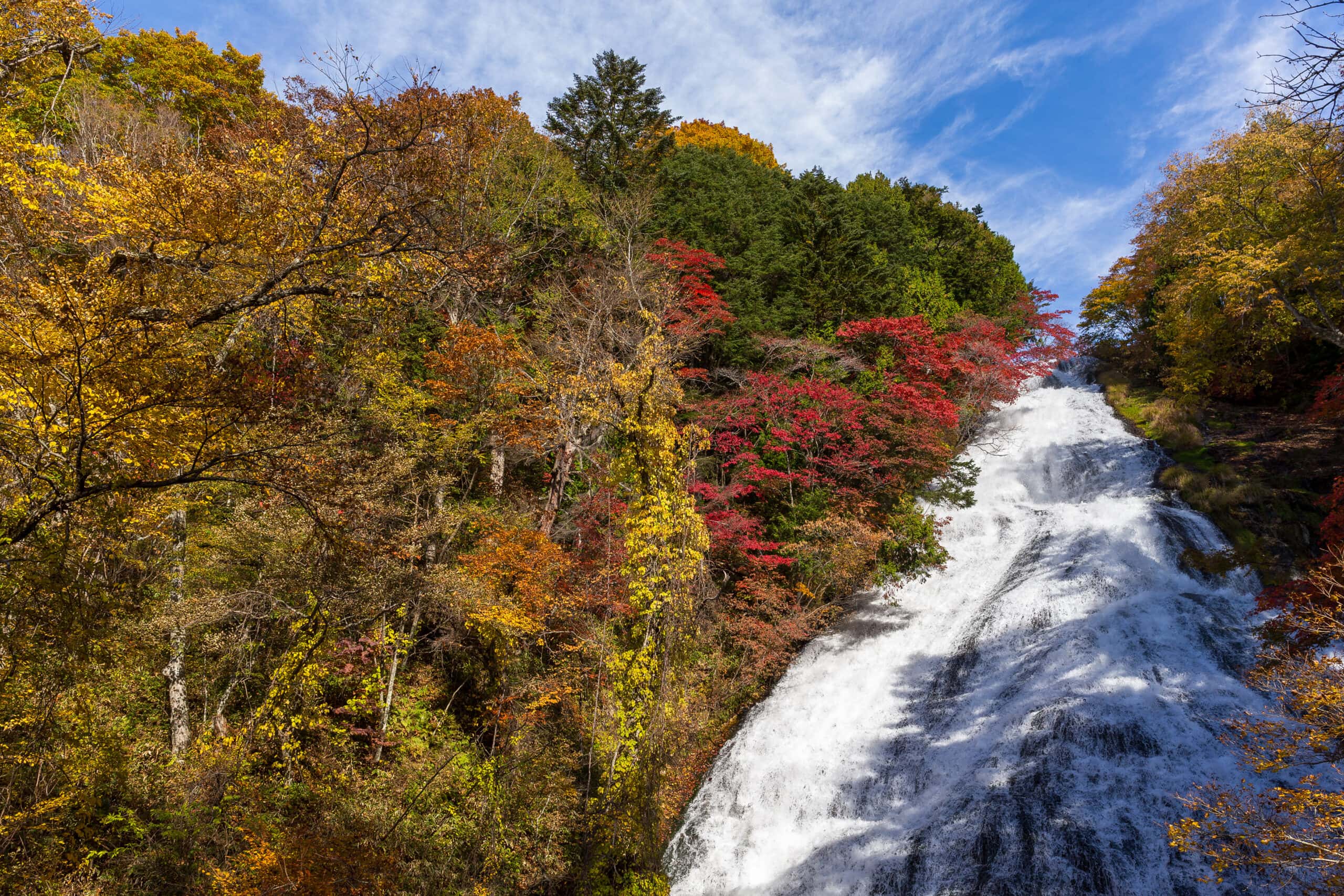
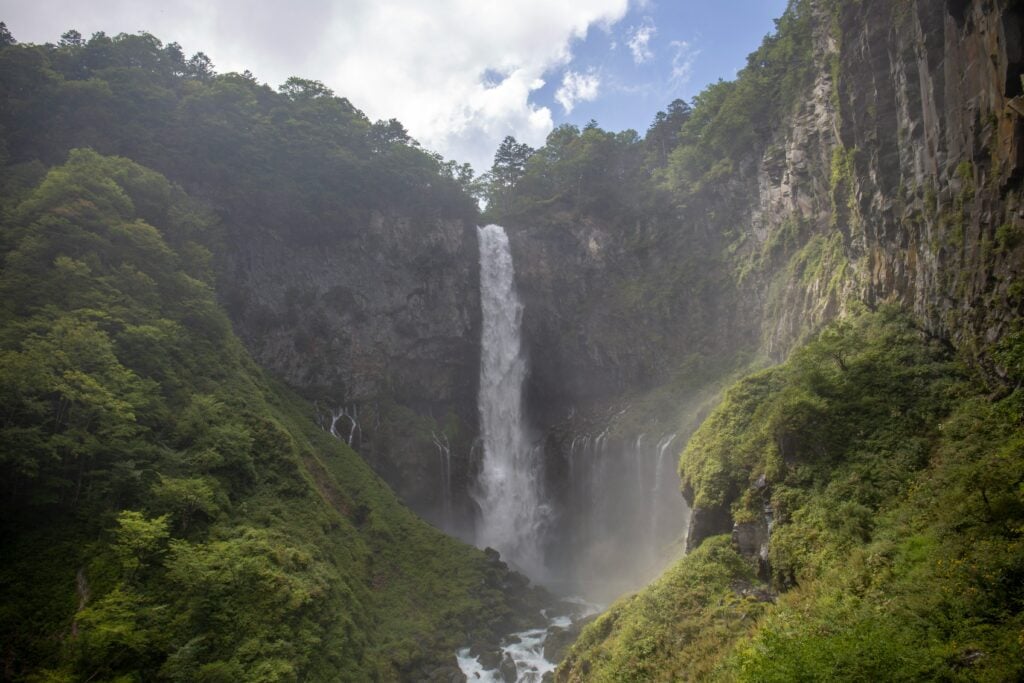
Lake Chuzenji sits at 1,269 metres above sea level, a 30-minute drive above Nikko town via the famous Irohazaka switchback road. The lake surface temperature in summer keeps the surrounding area noticeably cool even on the hottest days. Kegon Falls drops 97 metres at the lake’s eastern outlet, its mist reaching the viewing platforms below and providing a natural cooling effect. The combination of the drive up, the lake, and the falls makes for a complete half-day excursion within a Nikko visit.
Travelling in Summer with a Private Guide
Summer day trips from Tokyo require more careful planning than visits in spring or autumn. Starting early, managing time in direct sun, and knowing when to move between sites and air-conditioned interiors makes a measurable difference to how much you can comfortably see in a day. Our guides have visited each of these destinations across every season and know which routes, viewpoints, and timing work best in summer conditions.
All Haven Japan day trips use a Toyota Alphard with full air conditioning. We pick up from your hotel in central Tokyo, handle all driving and navigation, and carry chilled water for the journey. Flexible start times allow for early departures that take advantage of cooler morning temperatures. If a location becomes too crowded or too hot at midday, the itinerary can be adjusted without the constraints of train timetables.
We can combine two destinations in a single day if your group prefers variety, or spend the full day in one area with time for meals, exploration, and a slower pace. The itinerary is confirmed in advance and remains flexible on the day.
Step away from the city heat
Private summer day trips to Hakone, Kamakura, and Nikko. Air-conditioned vehicle, flexible timing, and a guide who knows the coolest routes. Departing from your hotel in Tokyo.
Explore private day tripsSummer Travel Tips for Day Trips from Tokyo
Start as early as possible
The most significant variable in summer comfort is when you begin. Arriving at major sites before 9am means cooler temperatures, smaller crowds, and better light for photography. By 11am the heat at exposed viewpoints and in open temple courtyards becomes noticeably more intense. Planning your outdoor activity for the morning and reserving indoor sites and lunch for midday is the most effective single adjustment you can make.
Dress for the conditions
Light, breathable clothing in natural fabrics is the practical choice for Japanese summers. A wide-brimmed hat provides more sustained sun protection than sunscreen alone. Comfortable walking shoes with good ventilation matter considerably on days that involve extended periods on foot. A light layer for air-conditioned buildings is worth including, as the temperature difference between outside and interior spaces can be significant.
Stay hydrated throughout the day
Dehydration in Japanese summer heat occurs faster than most visitors expect. Carrying a large reusable bottle and refilling it regularly is the simplest approach. Convenience stores are found at frequent intervals near all major tourist sites and stock a wide range of cold drinks. Isotonic sports drinks are more effective than water alone when spending extended time in heat and humidity.
Apply sunscreen and use a cooling towel
High-factor sunscreen applied before leaving the hotel and reapplied at midday provides the baseline protection needed for a day outdoors in Japanese summer. A cooling towel, available at most Japanese pharmacies and convenience stores, can be dampened and applied to the neck or wrists for immediate temperature relief. Small battery-powered fans are widely available and genuinely useful during queues and in outdoor spaces without shade.
Plan around shade and indoor breaks
The temples, shrines, and cultural sites that make these destinations worth visiting often include shaded gardens, cool interiors, and covered walkways that provide natural relief from direct sun. Planning the sequence of sites to include regular intervals indoors or in shade makes sustained outdoor touring comfortable even on the hottest days. A long lunch in a well-chosen restaurant during the peak heat of early afternoon is a natural and enjoyable way to pace the day.
Frequently asked questions
When is summer in Japan and how hot does it get?
Japan’s summer season runs from mid-June through September. Tokyo regularly reaches 35 degrees Celsius or above in July and August, with humidity making the heat feel considerably more intense than the recorded temperature. Typhoon season runs from August through October, with the highest probability of storms in September. The period from late June through July also brings the rainy season, or tsuyu, characterised by overcast skies and frequent showers rather than sustained downpours.
Which day trip destination is coolest in summer: Hakone, Kamakura, or Nikko?
Nikko is consistently the coolest of the three, with summer temperatures of 21 to 25 degrees Celsius at its higher elevations, compared to the upper thirties common in central Tokyo. Hakone runs at 22 to 26 degrees in summer due to its mountain setting. Kamakura, being coastal rather than elevated, tends to be warmer at 27 to 30 degrees, though sea breezes provide some relief. All three destinations are meaningfully cooler than central Tokyo during the hottest months.
Is Japan worth visiting in summer despite the heat?
Yes. Summer in Japan brings some of the country’s most vibrant festivals, including Obon in mid-August, as well as fireworks displays, illuminated temple events, and active outdoor markets. The key is managing the heat by planning outdoor activity in the early morning and late afternoon, using air-conditioned transport and interiors during the middle of the day, and choosing destinations at higher elevation or on the coast where temperatures are noticeably lower than in central Tokyo.
What should I wear and bring on a summer day trip from Tokyo?
Light, breathable clothing in natural fabrics is the most practical choice for Japanese summers. A sun hat and high-factor sunscreen are essential for outdoor time. A portable cooling towel or small battery-powered fan are worth carrying. Staying hydrated is critical; convenience stores throughout Japan sell a wide range of cold drinks and can be found at frequent intervals near all major tourist sites. Starting early, before 9am, makes the most significant difference to comfort on any summer day trip.