
Nikko Day Trip: The Ultimate Guide
Extravagant shrines, mountain waterfalls, and the hidden corners that most visitors never find. Everything you need before you go.
Nikko is one of the few places in Japan that asks you to slow down and look carefully. The shrine complex is deliberately overwhelming: every surface carved, lacquered, gilded. The mountains around it are ancient and unhurried. Understanding the contrast between the two is the beginning of understanding Nikko.
The shrine that was built to overwhelm
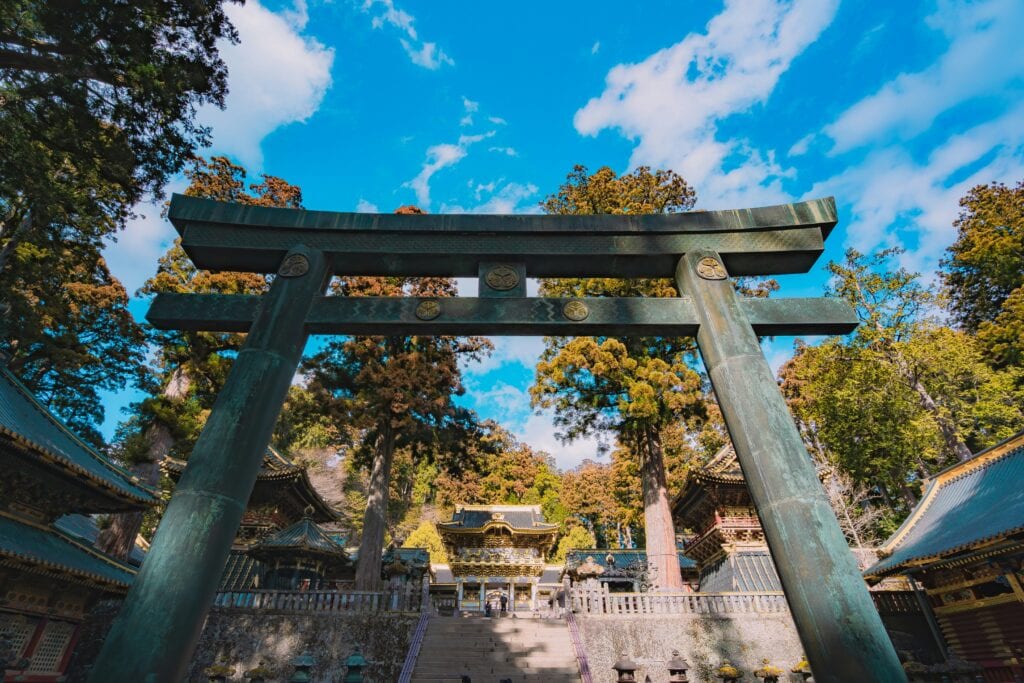
Toshogu is the mausoleum of Tokugawa Ieyasu, the warlord who ended a century of civil war and unified Japan under the Edo shogunate in 1603. His grandson, the third shogun Iemitsu, rebuilt the complex between 1634 and 1636 using 15,000 artisans drawn from across the country. The intention was unambiguous: to make something that could not be ignored, and that would communicate, to anyone who saw it, the absolute authority of the Tokugawa clan.
It succeeds. The Yomeimon Gate alone carries more than 500 individual carvings. Animals, flowers, mythical creatures, and sages crowd every surface in colours that were originally even more vivid than they appear today. The gate is nicknamed Higurashimon, “the gate you could look at until sunset,” and the description is accurate. Most visitors who allow themselves the time find that they have spent far longer than they intended simply standing in front of it.
The shrine complex is extravagant almost to excess, and deliberately so. It is meant to overwhelm, and it succeeds.
Three specific details reward close attention. The Nemuri-neko, the “sleeping cat” carved above the gate leading to the shogun’s tomb, is Japan’s most famous piece of decorative woodwork: a single cat, rendered with such naturalism that it appears to be breathing. The Sanbiki-saru, the three wise monkeys carved on the sacred horse stable (the only unpainted building in the complex), are the original “hear no evil, see no evil, speak no evil” figures from which all subsequent versions derive. And the path up through the cedars to Ieyasu’s actual tomb is one of the finest short walks in Japan: the contrast between the shrine’s extravagance below and the plain bronze urn at the summit is a deliberate act of restraint.

The waterfalls and the lake above
A short drive or bus ride from the shrine complex, the road climbs the Irohazaka switchbacks, 48 hairpin bends ascending 440 metres through cedar and maple forest. The elevation change is part of the experience: the air cools perceptibly, the density of the trees changes, and by the time you reach Lake Chuzenji you are in a different kind of landscape altogether.
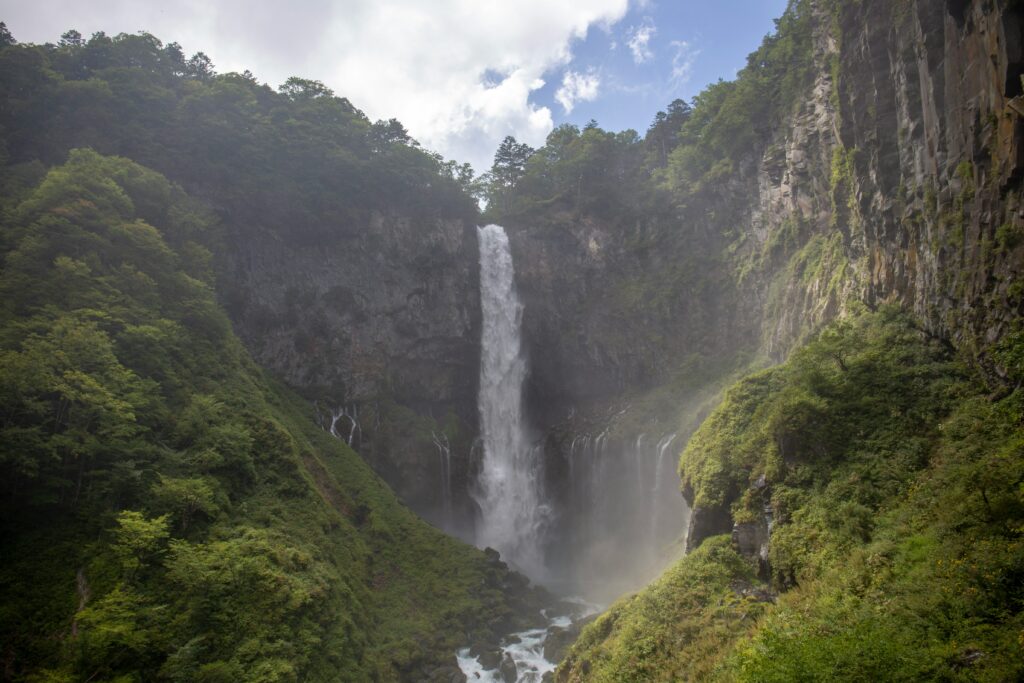
Kegon Falls is the most dramatic waterfall in the Nikko area and one of Japan’s three officially designated great waterfalls. Water from Lake Chuzenji drops 97 metres in a single vertical plunge into the gorge below. A paid elevator descends to an observation platform at the base; the full scale of the falls is only apparent from here, where the spray reaches and the sound fills the canyon. The upper observation deck, reached by a short walk from the main road, gives the wider view and is free to access.
Lake Chuzenji was formed roughly 20,000 years ago by a lava flow from Mount Nantai that dammed the valley. At 1,269 metres above sea level, it sits in a bowl of mountains and forest that produces some of the most concentrated autumn colour in the Kanto region, arriving two to three weeks ahead of Tokyo. The Chuzenji-ji temple on the eastern shore, carved from a single zelkova tree, has stood here for over twelve centuries. A boat crossing to the western shore is quieter than it sounds and gives an angle on the mountains that the road does not.

The corners most visitors miss
Nikko’s main circuit, from Toshogu to Kegon Falls to Lake Chuzenji, is genuinely excellent. But the town and its surroundings contain a second layer that the majority of visitors, particularly those on a tight day-trip schedule, do not reach.
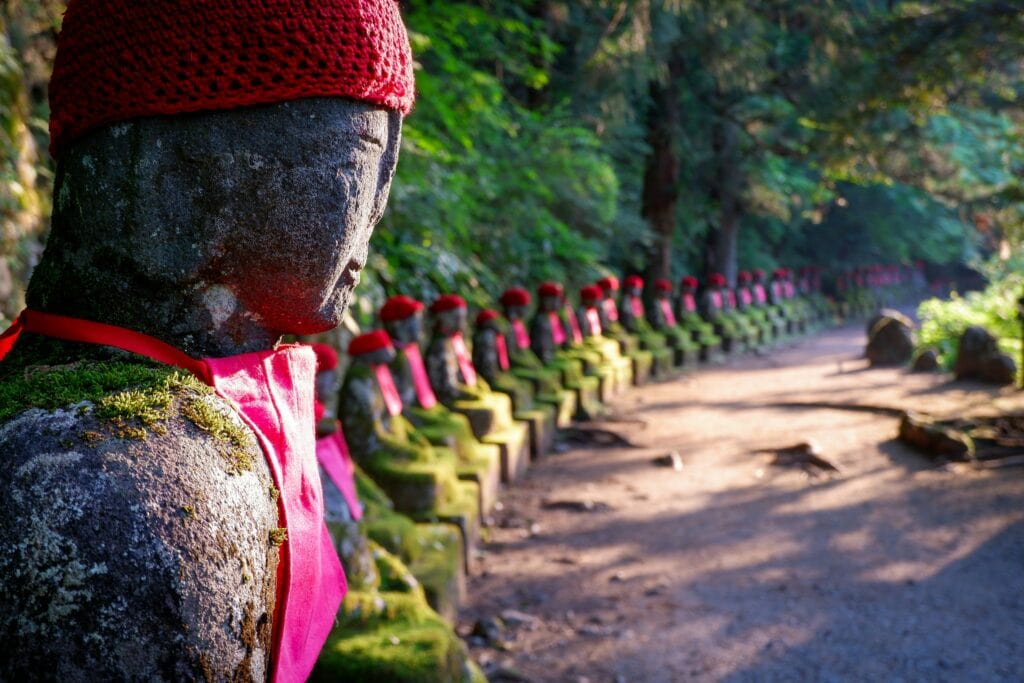
Kanmangafuchi Abyss is a gorge carved by a lava flow from Mount Nantai, reached by a twenty-minute walk from the centre of Nikko town. Along its banks stands a line of roughly 70 Jizo stone statues, each wearing a small red bib, each slightly different from its neighbours. The path is quiet, shaded by maples, and has an atmosphere that is entirely distinct from the shrine complex nearby. Local legend holds that the statues cannot be counted accurately: each time they are numbered, the total is different.
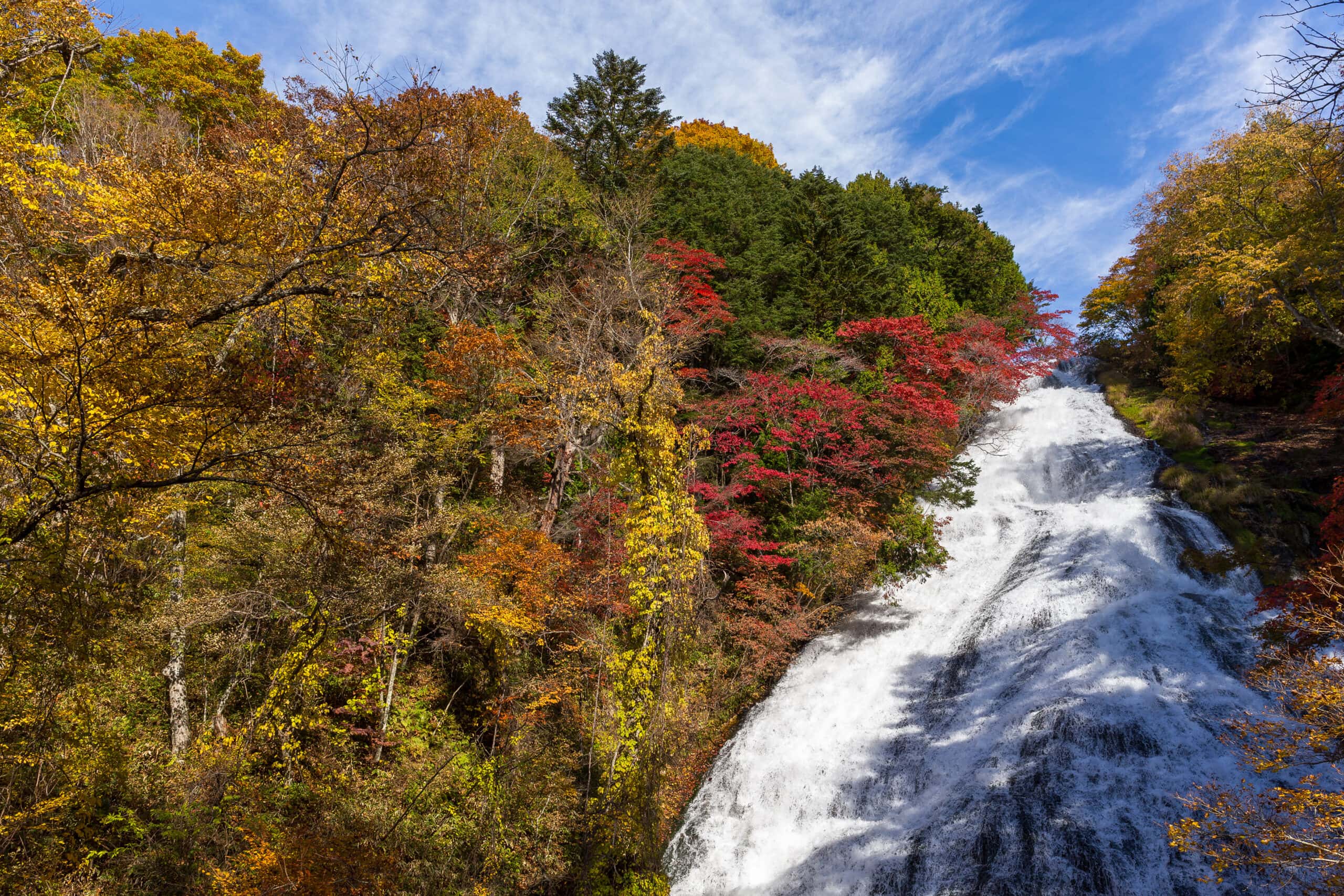
Kirifuri Falls is a tiered waterfall northeast of the main town, reached by a trail through cedar forest. It sees a fraction of the visitors that Kegon does, which gives it an entirely different character: quieter, more physically engaged, more rewarding for those who prefer their landscape with some effort attached. In autumn, the surrounding maples close in around the white water with considerable drama.
The Imperial Villa and its attached garden, operated by the Imperial Household Agency, can be visited with advance booking. The villa was used by the imperial family from the Meiji period into the 20th century and preserves a particular style of domestic Japanese architecture that has almost entirely disappeared from accessible public buildings. The Botanical Garden adjacent to it contains one of the finest collections of alpine flora in Japan.

When to visit
Nikko rewards a visit in any season, but the experience differs significantly depending on when you go. Understanding this in advance is the difference between arriving well-prepared and arriving surprised.
Autumn (mid-October to early November) is the season that most experienced visitors and guides consider the best. The Japanese maple and zelkova turn crimson and gold against the backdrop of the ancient cedars, and the contrast with Toshogu’s gilded lacquerwork becomes genuinely spectacular. The colour at Lake Chuzenji, which sits 440 metres above the shrine complex, arrives two to three weeks ahead of the valley below and extends the season for those who plan accordingly.
Spring (late April to mid-May) brings azaleas to the mountain slopes and fresh green to the cedars. The rhododendron displays on the slopes above Lake Chuzenji are among the finest in the Kanto region and coincide with a relatively quiet period in the tourism calendar, when the cherry blossom crowds in Tokyo have dispersed.
Summer is the practical season for families. Nikko sits several degrees cooler than Tokyo, which makes the mid-summer months comfortable in the mountains even when the city below is at its most humid. The waterfalls are at their fullest flow after the rainy season, and the forested trails are at their most lush.
Winter brings snow to the shrines and with it a stillness and visual drama that the busier seasons do not match. The Toshogu complex under snow, with the cedar forest silent around it, is something that very few international visitors experience. The roads to Chuzenji can close in heavy snow; checking conditions before travel is essential.
Nikko with a Private Guide
Haven Japan’s Nikko day trip takes you through the UNESCO heritage shrines, the mountain waterfalls, and the local corners that a self-guided visit doesn’t reach. Every detail arranged before you arrive.
Explore the Nikko experienceFrequently asked questions
How do you get from Tokyo to Nikko?
The fastest option is the Tobu Nikko Limited Express from Asakusa Station, which takes around 1 hour 50 minutes with no transfer required. The JR pass route via Utsunomiya Shinkansen plus a local train takes slightly longer. A private vehicle with a guide is the most flexible option, particularly if you plan to visit Chuzenji Lake and the mountain waterfalls, which are not easily reached by public transport on a tight schedule.
How long do you need in Nikko?
A focused day trip allows you to visit Toshogu Shrine and the immediate complex comfortably. To include Kegon Falls, Lake Chuzenji, and the Kanmangafuchi Abyss, a full day from early morning is necessary. An overnight stay opens up the mountain areas at quieter hours and allows visits to the Imperial Villa and Botanical Gardens without rushing.
What is the best time of year to visit Nikko?
Autumn (mid-October to early November) is widely considered the finest season: the Japanese maple and zelkova turn crimson and gold against the cedar forests, and the contrast with Toshogu’s lacquerwork is extraordinary. Spring brings azaleas and fresh green cedars. Summer is cooler than Tokyo by several degrees, making the mountain areas especially pleasant. Winter brings snow to the shrines and a stillness that experienced travellers prize.
What should I eat in Nikko?
Yuba, the tofu skin that forms on the surface of heating soy milk, is Nikko’s most distinctive local food and appears in everything from sashimi to noodle soups. The area also produces excellent wagyu beef and freshwater fish from the mountain rivers. The restaurants along Shinkyo Bridge serve traditional set menus built around yuba; those willing to walk further from the main shrine area find quieter, better-value options.