
Visiting Tokyo: Your 10-Minute Guide
What a private guide wants you to know before you arrive: districts, seasons, day trips, and the details the itinerary planners miss.
Tokyo does not reveal itself to the hurried visitor. Its most interesting layers: the neighbourhood izakaya down an unmarked alley, the Shinto shrine hidden inside a skyscraper courtyard, the craft market that exists only on certain Sundays. All require someone who knows where to look and when to go.


A city that rewards attention
Tokyo is the most populous metropolis on earth, yet it operates with a quiet coherence that continues to surprise first-time visitors. The key is understanding that it is not one city but a collection of distinct villages, each with its own character, its own rhythm, and its own relationship to time. Asakusa carries the atmosphere of the old Shitamachi merchant town; Yanaka, tucked between universities and train tracks, feels almost rural; Shimokitazawa moves to the beat of second-hand bookshops and live music venues.
Culture here is not contained in museums. It unfolds in the way a sushi master handles rice, in the choreography of a morning temple ritual, in the care taken over the wrapping of a single piece of wagashi. The best guides are those who understand this: those who know that a conversation with a tofu maker in Kyoto-style Nezu can say more about Japanese aesthetics than any gallery exhibit.
Tokyo’s most interesting layers require someone who knows where to look, and which door to open.
Food is one of the city’s most direct entry points. Tokyo has more Michelin stars than any other city in the world, but that number tells you almost nothing useful. The more relevant fact is that extraordinary cooking exists at every price point, from the tempura-don counter in Shinjuku where the chef has been frying for forty years, to the standing sushi bar in Tsukiji that requires neither reservation nor ceremony. A guide who eats well in this city is worth more than a restaurant list.
The districts a private guide knows
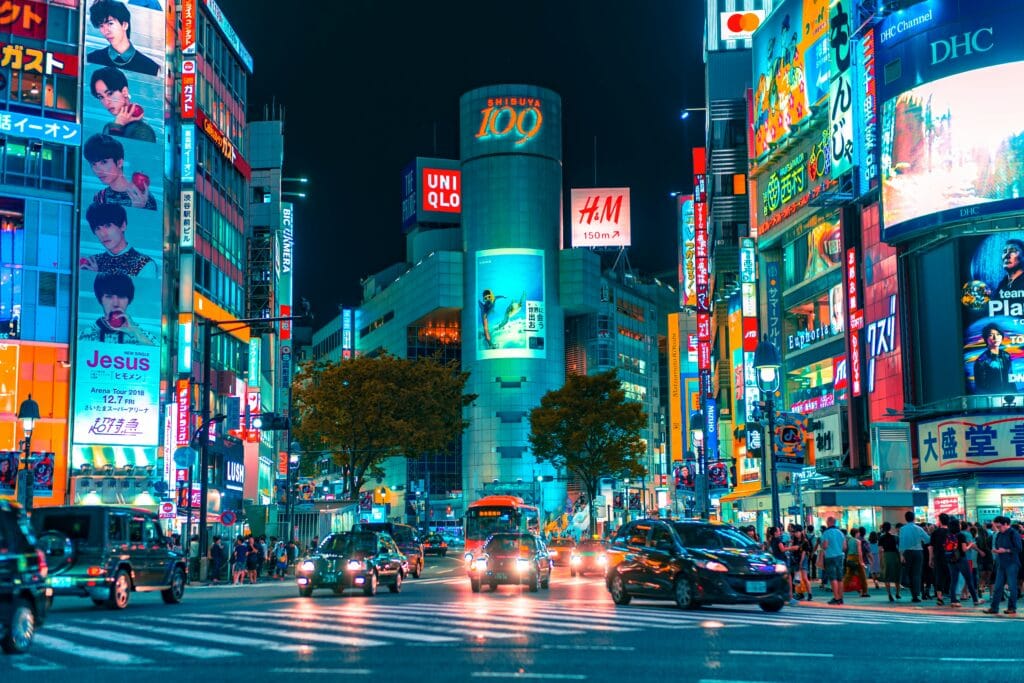
Most first-time visitors anchor themselves in Shinjuku or Shibuya and venture outward in circles. This is understandable; both districts are spectacular, but it misses the more textured version of the city. Below is a private guide’s reading of Tokyo’s major neighbourhoods, the way they actually differ, and what each one asks of the visitor who wants to understand it.
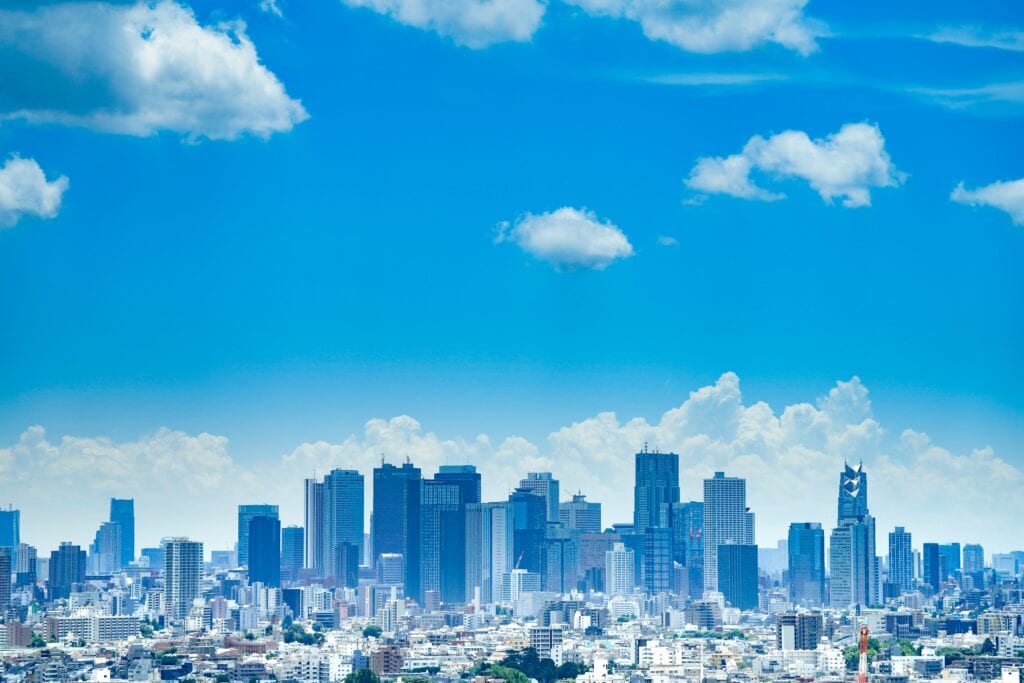
Shinjuku operates on multiple registers simultaneously: the west exit hosts some of the world’s tallest office towers and the Metropolitan Government Building observation deck; the east exit leads into Kabukicho, Tokyo’s entertainment quarter, where the neon density becomes architectural. The narrow alleys of Golden Gai, fifty or so bars each seating fewer than ten people, represent something else entirely: a kind of deliberate anti-scale that has survived real-estate pressure for decades.
Shibuya is famous for its scramble crossing, but the crossing is a threshold, not a destination. The real Shibuya begins in the backstreets of Daikanyama and Nakameguro, both walkable from the station, where independent boutiques, record shops, and coffee bars have established themselves in a way that larger commercial forces haven’t yet absorbed. The canal walk along Meguro River during cherry blossom season is one of the city’s finest hours.
Asakusa is the district that most clearly carries the imprint of old Tokyo. Senso-ji, the 7th-century Buddhist temple, is the centrepiece, but the interest runs deeper: the Nakamise shopping street leading to the temple gate, the rickshaws, the craft workshops along Kappabashi where Tokyo’s restaurant supply industry has operated for a century. A guide who knows Asakusa will show you the parts of it that the tourist coach misses entirely.
Ginza is Tokyo’s equivalent of Mayfair or the Champs-Élysées: luxury department stores, flagship architecture, the kind of restaurant that requires a Japanese phone number to book. But alongside the obvious glamour is a neighbourhood with serious galleries, a long tradition of fine printing and stationery, and an underrated weekend pedestrian street culture.
Akihabara is best understood not as a curiosity but as a serious window into a particular strand of Japanese creativity and commercial ingenuity. The density of electronics, anime culture, and maid cafes reads as overwhelming to the uninitiated; with context, it becomes coherent — even fascinating.

The day trips that complete the picture
Tokyo’s position on Honshu’s Pacific coast makes it an exceptional base for day excursions. Three destinations stand above the rest, each offering something Tokyo itself cannot, each reachable in under ninety minutes by train.
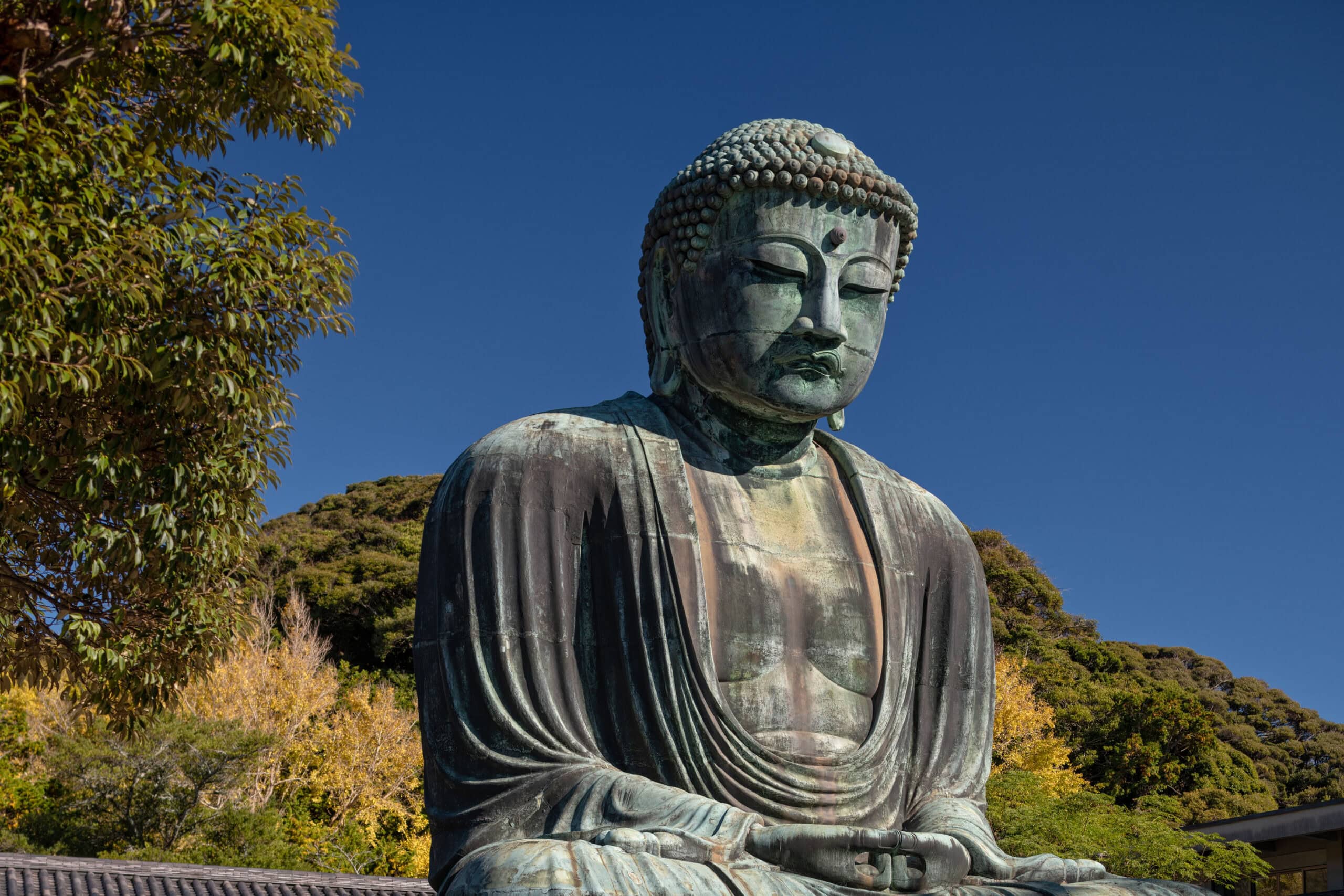
Kamakura is where the Kamakura shogunate ruled Japan from 1185 to 1333, and the city retains the gravity of that history. The Great Buddha at Kotoku-in, cast in bronze in 1252 and sitting in the open air since an earthquake destroyed its housing in 1334, is one of Japan’s defining images. But Kamakura’s real depth lies in the walking trails that connect its temples through cedar forests, in the bamboo groves of Hokokuji, in the cave shrines of Mandarado and Zeniarai Benzaiten. The coastal approach from Enoshima, if time permits, adds a further dimension.
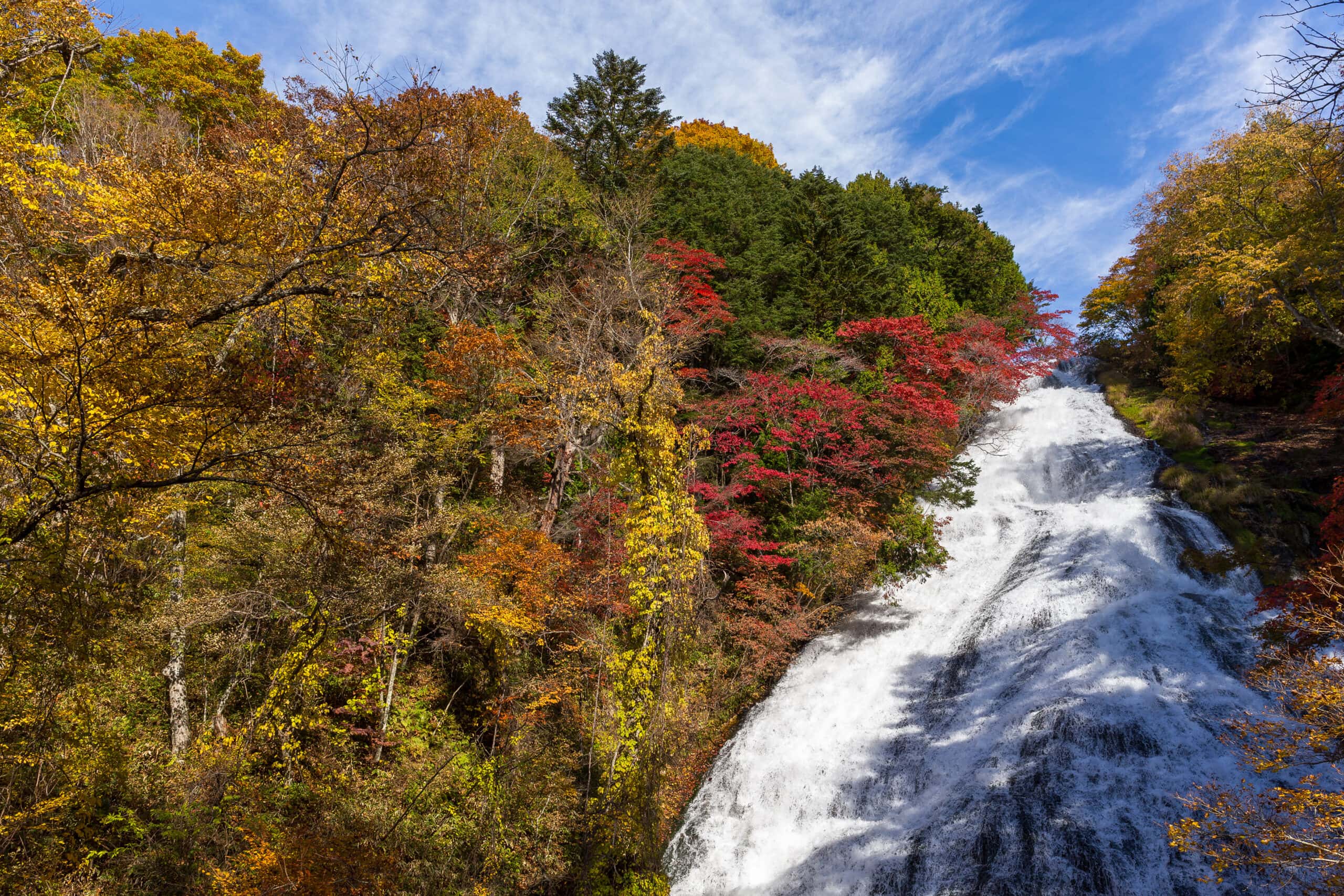
Nikko holds the mausoleum of Tokugawa Ieyasu, the shogun who unified Japan after a century of civil war. The Tosho-gu shrine complex is extravagant almost to excess, carved and lacquered in a way that runs deliberately counter to the restraint of classical Japanese aesthetics. It is meant to overwhelm, and it succeeds. The mountain setting helps: cedar trees that are several centuries old, stone lanterns, and an altitude that drops the temperature several degrees below Tokyo’s even in summer. The Ryuzu Falls, a short drive away, are reason enough to extend the visit.
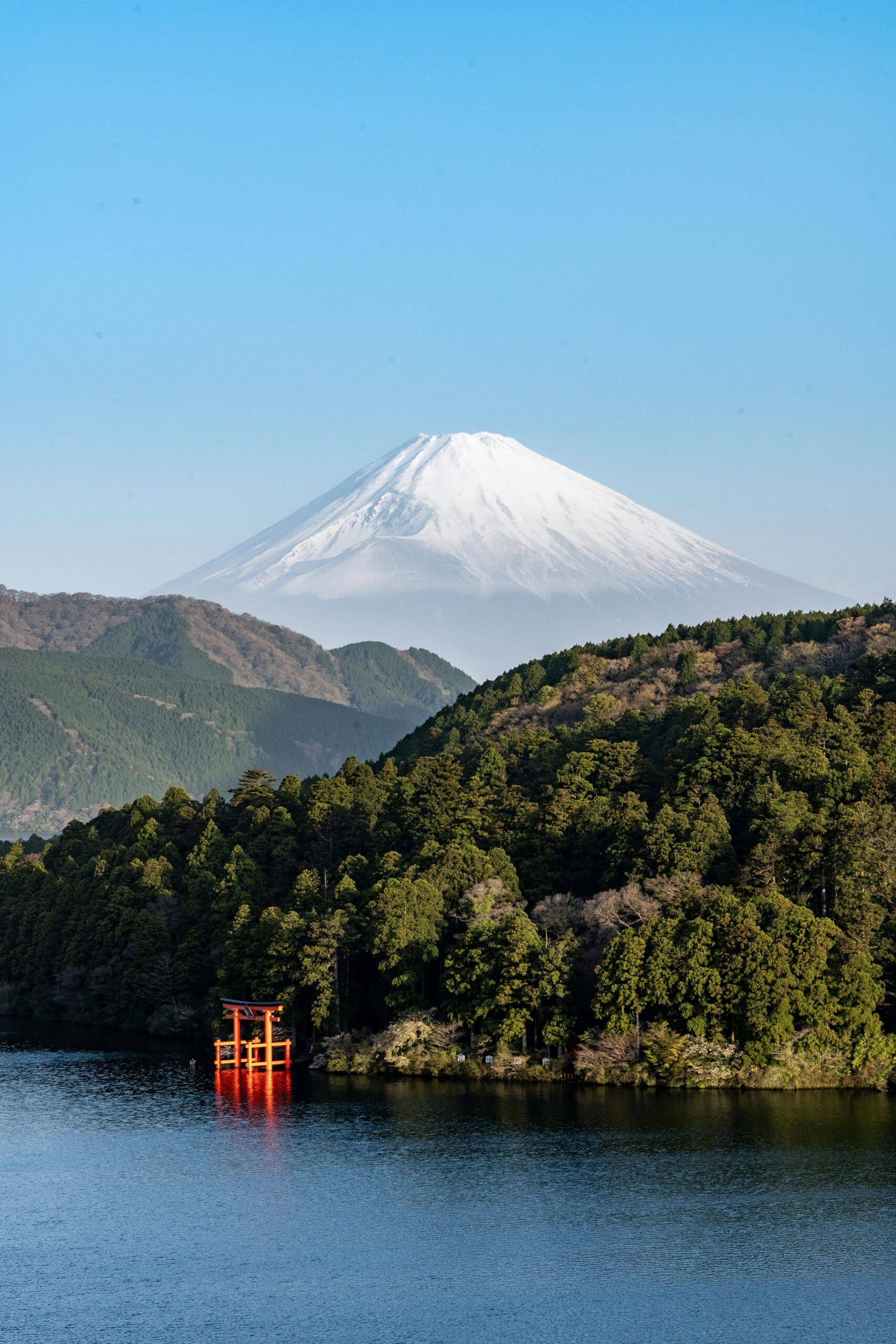
Hakone is the answer to the question of where to see Mt Fuji on clear days. The approach by mountain railway and cable car is theatrical; the view across Lake Ashi, with the mountain rising behind the torii gate, is one of the most photographed scenes in Japan for good reason. The Hakone Open Air Museum and a traditional ryokan with onsen round out a day that most visitors remember as one of their best in Japan.
When to visit
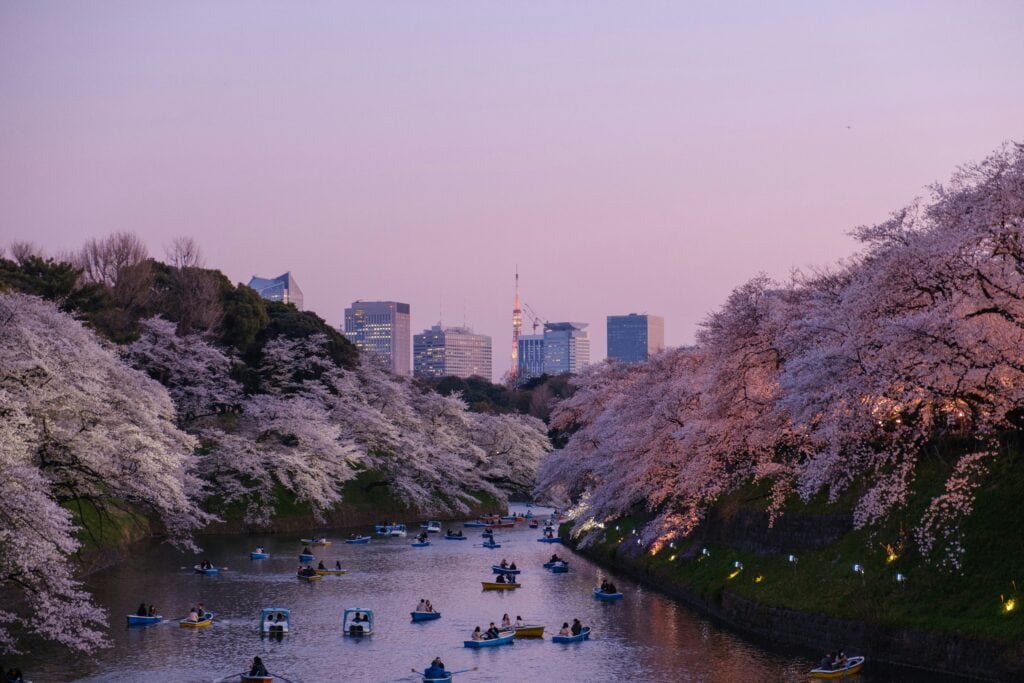
Tokyo’s four seasons are distinct, and each one has its advocates. Spring (late March to mid-April) brings the cherry blossoms: the hanami picnic culture that gathers the entire city under the trees, turning ordinary parks and riverbanks into something remarkable. Chidorigafuchi, Shinjuku Gyoen, Yoyogi Park, and the Meguro River are the main stages, each with a different atmosphere. It is the busiest period of the Japanese tourism calendar; plan and book accordingly.
Autumn (mid-October to mid-November) is, for many private guides, the preferred season. The foliage is exceptional: the Japanese maple turns a deep crimson that photography rarely captures accurately — and the crowds, while present, are more manageable than spring. The air is clear, Mt Fuji is at its most visible, and the city is in full cultural calendar mode with exhibitions, food festivals, and outdoor events.
Summer is humid and hot, but it carries the festival season: the Sumida River Hanabi fireworks in late July, the Bon Odori dances in August, the neighbourhood matsuri that fill the city’s alleyways with lantern light. Those who visit in summer and come prepared find a Tokyo that is more openly celebratory than at any other time of year.
Winter brings the illumination season: entire neighbourhoods dressed in light installations from December through January — and the relative quiet of January and February, when international tourism slows and the city belongs more fully to those who are there.

Private Experiences in Japan
Every Haven Japan experience is designed around you: your pace, your interests, your questions. A private guide who knows the city changes everything you see.
Explore our experiencesFrequently asked questions
How many days do you need to visit Tokyo?
Most visitors find four to five days allows a meaningful encounter with the city — enough time to move between districts at a human pace, include one day trip, and still leave room for the unexpected. A week or more is better if you want to go beyond the obvious.
What is the best time of year to visit Tokyo?
Spring (late March to mid-April) for cherry blossoms and autumn (mid-October to mid-November) for fall foliage are the most celebrated seasons. Both are genuinely beautiful but very busy. November can be a quieter alternative: the autumn colours are exceptional, the crowds are thinner, and the weather remains mild.
Is Tokyo difficult to navigate without speaking Japanese?
Tokyo’s train network is extensive but legible: most signage appears in English, and IC cards (Suica, Pasmo) work across the entire system. Day-to-day navigation is manageable. The friction appears when you move off the main circuit, into smaller restaurants, local markets, neighbourhood shrines — which is precisely where a private guide changes what the city reveals to you.
What day trips from Tokyo are worth doing?
Kamakura (Great Buddha, coastal temples, bamboo groves), Nikko (ornate mausoleum complex, mountain waterfalls), and Hakone (Mt Fuji views across Lake Ashi) are the three most rewarding. Each is an hour or less from Tokyo by train, and each is most fully understood with a guide who knows what to show you and when.