
Before Going to Japan
What first-time visitors need to know about culture, transport, food, cash, and how to move through the country with confidence.
Japan rewards visitors who arrive with a little preparation. Not because the country is difficult to navigate, but because understanding a handful of cultural norms and practical realities before you land removes uncertainty and lets you focus on what is in front of you. This guide covers the things that matter most: how people interact, how the transport system works, how to handle money, what to eat and where to sleep.
Cultural Awareness is Key
Japan has a social culture built around consideration for others. Respect, politeness, and a quiet awareness of the people sharing your space are values that run through almost every interaction. You will notice this on the trains, in the streets, and in shops and restaurants. People queue without complaint. Voices are kept low in public. Minor inconveniences are absorbed without fuss.
This does not mean you need to match every convention perfectly. Japanese people are genuinely welcoming to visitors and appreciate any effort made to engage with the culture respectfully, however modest that effort might be. Getting things slightly wrong is always forgiven. What tends to leave a better impression is a willingness to observe and adapt rather than proceeding as if the conventions do not apply to you.
The word that comes up most often in this context is meiwaku, roughly translated as causing inconvenience or trouble to others. It is a concept that underlies a great deal of Japanese social behaviour. Being mindful of your impact on the people around you, in volume, space, and consideration, is the single most useful cultural adjustment a first-time visitor can make.
Essential Etiquette Rules
A few conventions apply consistently across Japan and are worth knowing before you arrive. None of them are complicated, but being aware of them in advance removes the awkwardness of discovering them mid-situation.
Shoes
Remove your shoes before entering private homes, traditional ryokan guestrooms, many temple interiors, and some restaurants where you sit on tatami mats. Slippers will usually be provided. A separate pair of toilet slippers is often placed outside the bathroom and should be worn only inside it. The rule is intuitive once you encounter it: if the floor changes from hard to soft, or if you see a row of shoes at an entrance, take yours off.
Bowing
A small bow of the head is the standard greeting and expression of thanks in Japan. You do not need to perfect this. A slight forward inclination of the head and upper body when thanking a shopkeeper, a waiter, or a stranger who has helped you is always well received. Vigorous handshakes are not customary, though in international contexts they are understood and accepted.
Public Spaces and Transport
- Keep voices low on trains and buses. Phone calls in train carriages are considered inconsiderate and are frowned upon. Most trains have signs asking passengers to set phones to silent.
- Eating and drinking while walking is generally avoided in most parts of Japan. Street food from a festival stall is an exception. A coffee walked through a shopping district is less so.
- Queue patiently at train platforms, where painted lines on the ground mark exactly where doors will open. Standing in the correct position and allowing passengers to exit before you board is expected.
- Priority seats on trains and buses are designated for elderly passengers, pregnant women, and those with young children. It is courteous to avoid occupying them when the vehicle is anything less than very full.
Tipping
Do not tip in Japan. It is not practised in restaurants, hotels, taxis, or anywhere else, and offering a tip can cause genuine confusion or embarrassment. Exceptional service is the standard expectation, not a reason for a bonus payment. The price you pay is the price, and that is understood by everyone involved.


Getting Around Japan
Japan has one of the most efficient and punctual public transport systems in the world. The infrastructure is well signed in English on main intercity and urban routes, and navigating it as a visitor is less daunting than it may initially appear. Understanding a few key components before you travel will save time and money.
The Shinkansen
Japan’s high-speed rail network connects the major cities at speeds of up to 320 kilometres per hour. The journey from Tokyo to Kyoto takes approximately two hours and fifteen minutes. The trains run with extraordinary regularity and punctuality, and the experience of travelling on them is a highlight of any trip to Japan in its own right. Tickets can be purchased at station ticket offices or through the JR website and affiliated booking services.
The JR Pass
The Japan Rail Pass is a flat-rate ticket available to foreign visitors that covers unlimited travel on most JR-operated services, including the Shinkansen, for a set period of days. Whether it represents value for money depends on your itinerary. For visitors planning to travel between Tokyo, Kyoto, Osaka, and Hiroshima within a week or ten days, it typically covers its cost. For those staying primarily in one area, it may not. Calculate the individual ticket costs for your planned journeys before purchasing.
IC Cards: Suica and Pasmo
For travel within cities, an IC card such as Suica or Pasmo is the most convenient option. These rechargeable prepaid cards work on virtually all metro, bus, and suburban rail services across Japan. You touch the card to the reader at the gate to enter and exit, and the fare is deducted automatically. IC cards also work at most convenience stores, vending machines, and some restaurants. They can be loaded with funds at ticket machines throughout the transport network and are available for purchase at major stations.
Language Tips
You do not need to speak Japanese to travel comfortably in Japan. English signage is widespread on the main transport networks, and most hotels, major attractions, and tourist-facing businesses have staff with at least basic English. That said, learning a small number of phrases before you arrive is both practically useful and appreciated in a way that goes beyond mere courtesy.
Phrases Worth Knowing
- Arigatou gozaimasu (ah-ree-gah-toh go-zai-masu) — Thank you. The most useful phrase you can learn. Use it freely.
- Sumimasen (soo-mee-mah-sen) — Excuse me. Used to get someone’s attention, to pass through a crowd, or to flag down a waiter. Extremely versatile.
- Konnichiwa (kon-nee-chee-wah) — Hello / Good afternoon. A standard daytime greeting.
- Eigo wa hanasemasu ka? (eh-go wah hah-nah-seh-masu kah?) — Do you speak English? Useful when you need more complex assistance.
For anything more involved, Google Translate’s camera function is a practical tool on the ground. Pointing your phone at a menu or a sign converts Japanese text into English in real time. It is not perfect, but it bridges most of the gaps you will encounter in daily situations.
Cash is Still Essential
Japan is more reliant on cash than most visitors expect, particularly those arriving from Western Europe or North America. Many smaller restaurants, family-run shops, local temples and shrines, and traditional businesses accept only cash. Contactless card payments are growing in urban areas, but assuming that cards will work everywhere is a mistake that can leave you stranded in a convenience queue at an inconvenient moment.
The most reliable way to access yen in Japan is through the ATMs located inside convenience stores. The networks at 7-Eleven, Lawson, and FamilyMart accept most international debit and credit cards and are available 24 hours. Bank ATMs, by contrast, often have restricted hours and may not accept foreign-issued cards. Arriving with some yen already exchanged, either before departure or at the airport on arrival, gives you an immediate safety net while you locate a convenience store.
Having a variety of denominations is useful. Many automatic ticket machines and vending machines dispense change in coins rather than notes, and smaller notes are practical for temple entrance fees, small food purchases, and tipping situations that do not involve tipping.
“Japan rewards visitors who pay attention. The conventions are not barriers, they are invitations into a way of being in public that feels remarkably considerate once you are inside it.”
Seasonal Planning Matters
Japan has four clearly defined seasons, each of which produces a different version of the country. Choosing when to visit is one of the more consequential travel decisions you will make, and the difference between a well-timed trip and a poorly timed one can be significant in terms of both experience and logistics.
Spring (late March to mid-April)
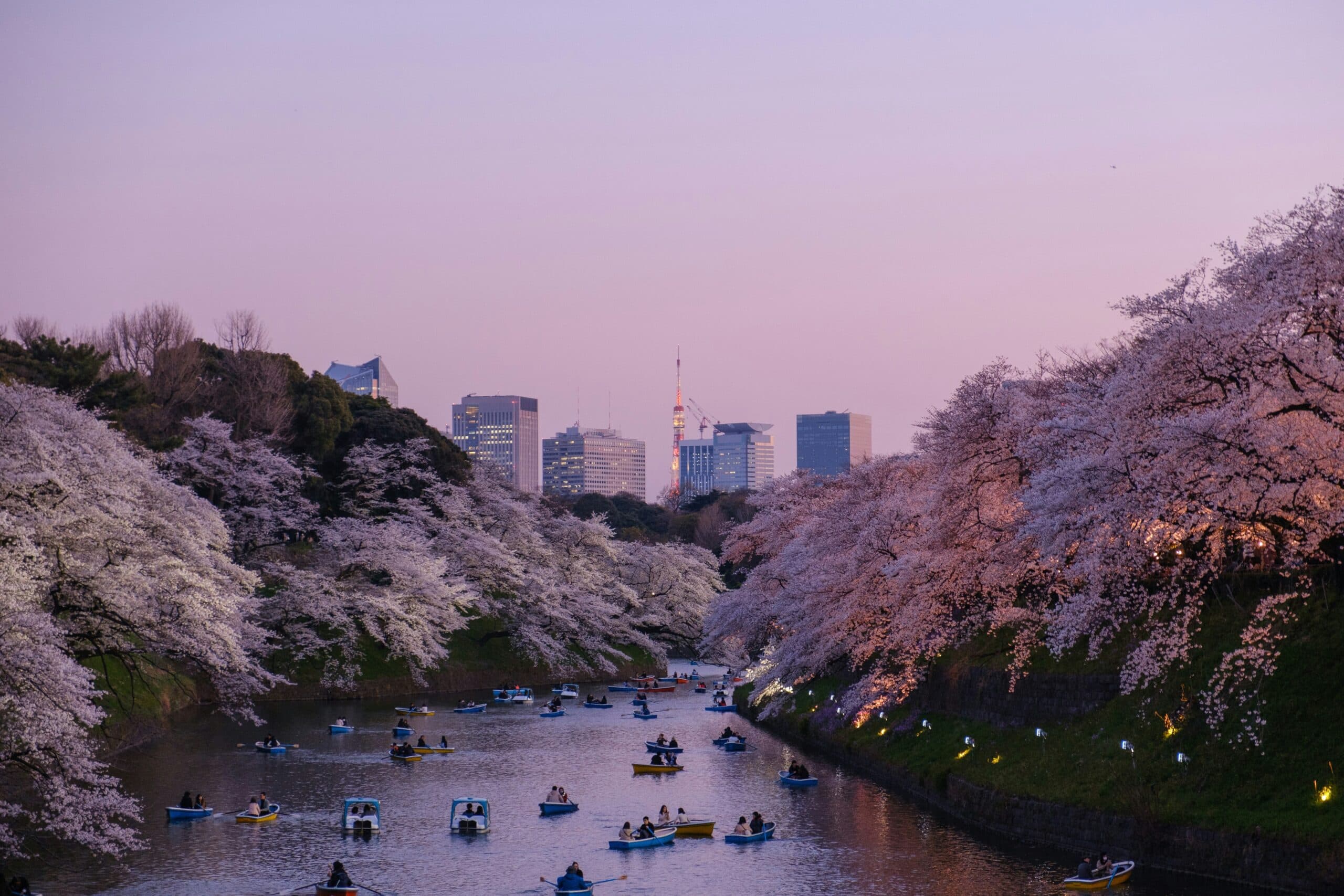
Cherry blossom season is the most popular time to visit Japan. The combination of mild temperatures, dramatic colour, and cultural resonance makes it genuinely special, but it also brings the largest crowds of the year. Accommodation in popular destinations books out months in advance, and some viewpoints require arriving very early to see them without significant numbers of other visitors.
Autumn (late October to mid-November)
Autumn foliage, known as koyo, brings a second wave of vivid colour across Japan’s parks, temples, and mountain landscapes. Temperatures are comfortable and the light is often exceptional. This season is less crowded than spring in most destinations, and accommodation is somewhat easier to secure, though popular spots such as Nikko and Kyoto still fill up during peak colour weeks.
Summer (June to August)
Summer in Japan is hot and humid in the cities, regularly exceeding 35 degrees Celsius in Tokyo, Osaka, and Kyoto. Day trips to higher-altitude destinations such as Hakone and Nikko offer meaningful relief. Summer is also when Japan’s festival calendar is most active, with firework displays, outdoor events, and regional matsuri running throughout the season.
Golden Week
Golden Week, running from late April to early May, is the longest domestic holiday period in Japan. It brings very heavy crowds to all popular tourist destinations and significantly elevated prices for accommodation and transport. If your travel dates fall within Golden Week, plan and book everything well in advance. If they do not, you have avoided one of the most logistically challenging periods to visit.

Food Culture
Japanese food culture is deep, regional, and tied to seasonal ingredients in ways that reward curiosity. The version of Japanese food available internationally, while often excellent, represents a small subset of what you will encounter in the country itself. Arriving with an open approach to unfamiliar dishes and preparation methods will serve you well.
What to Eat
Ramen, tempura, soba, udon, okonomiyaki, and tonkatsu are all accessible and widely available starting points. Convenience store food, particularly at 7-Eleven and FamilyMart, is of surprisingly high quality and worth exploring. Many restaurants display plastic food models in their windows, which are an accurate and practical guide to what is inside and roughly what it will cost.
Regional specialities vary significantly between cities and prefectures. Kyoto’s kaiseki cuisine, the seafood markets of Hokkaido, Osaka’s street food culture, and the ramen styles unique to each major city are all worth seeking out as you travel. The depth of regional food variation in Japan is one of its most distinctive qualities as a travel destination.
Restaurant Customs
- Say itadakimasu before you begin eating. It is an expression of gratitude for the meal and is standard practice, equivalent to grace in a loosely cultural sense.
- Slurping noodles is entirely acceptable and is often interpreted as a sign of enjoyment. You do not need to hold back.
- Many restaurants, especially smaller ones, provide a wet towel (oshibori) when you are seated. It is for your hands, not your face, though the distinction is increasingly relaxed.
- The bill is typically settled at the register on the way out, not by handing money to your server at the table.
- Do not tip. See earlier in this guide.
Where to Stay
Japan offers a wider range of accommodation types than almost any other country, from international hotel chains and boutique city hotels to traditional inns and minimalist capsule facilities. Choosing the right type for your interests and budget is part of the planning process.
Ryokans
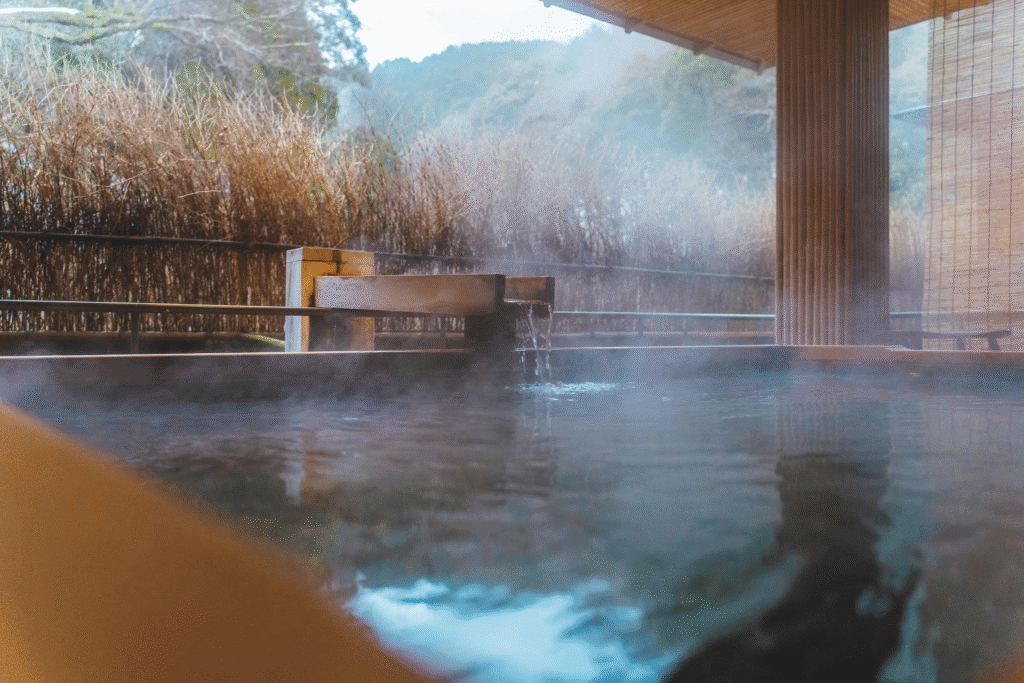
A traditional Japanese inn, or ryokan, offers an experience that is entirely different from a standard hotel stay. Rooms are typically floored with tatami mats and furnished with low tables and futon bedding laid out in the evening. Many ryokans include kaiseki dinner and breakfast as part of the room rate. Guests wear yukata robes provided by the inn and, where an onsen is on site, bathe communally or in private baths. A night or two in a well-chosen ryokan is one of the most memorable experiences available in Japan.
City Hotels
Tokyo, Osaka, and Kyoto have excellent hotel options across all price ranges. Business hotels, a category specific to Japan, offer compact but well-designed rooms at moderate prices and represent good value in central locations. Booking in advance is advisable during cherry blossom season, Golden Week, and autumn foliage, when demand significantly exceeds supply at all quality levels.
Capsule Hotels
Capsule hotels provide individual sleeping pods in a shared facility. They are practical for solo travellers on a budget or for a night between longer stays, and some modern iterations have elevated the format into something genuinely design-conscious. Most capsule hotels are single-sex and include shared bathroom facilities. They are an interesting experience to try once, though they are not suited to couples or families.
Final Thoughts
Japan is one of the easiest countries in the world to travel independently. The infrastructure is exceptional, the safety record is outstanding, and the general disposition of the population toward visitors is warm. The cultural conventions that seem unfamiliar before you arrive become intuitive very quickly once you are there, and the rewards of understanding even the basics of how the country works are immediate and significant.
Arrive curious, carry some cash, learn a few phrases, and give yourself enough time to move slowly. Japan does not reveal itself to people in a hurry. The temples, the food, the landscape, and the small daily moments are best experienced from a pace that allows for attention. If you want to explore the best of what is within reach of Tokyo, a private day trip with Haven Japan is the most efficient way to do exactly that.
Experience Japan with a Private Guide
Haven Japan’s private day trips from Tokyo take you to Hakone, Kamakura, Nikko, and beyond with a knowledgeable guide who handles all the logistics. No queues, no guesswork, just the best of what each destination has to offer.
Explore day trips →Frequently asked questions
Do I need cash in Japan?
Yes. Japan remains a predominantly cash-based society despite gradual changes in recent years. Many smaller restaurants, temples, shrines, and local businesses accept only cash. ATMs at convenience stores such as 7-Eleven, Lawson, and FamilyMart accept most international cards and are available 24 hours. Arriving with some yen already exchanged and withdrawing more on your first day from a convenience store ATM is the most reliable approach.
Do I need to speak Japanese to visit Japan?
You do not need to speak Japanese to have a successful trip to Japan. English signage is widespread on the main transport networks, and most major attractions have English-language information available. Learning a handful of phrases, such as arigatou gozaimasu (thank you), sumimasen (excuse me), and konnichiwa (hello), is appreciated and will be warmly received. Google Translate’s camera function is a practical tool for menus and signs that are Japanese-only.
What is the best time of year to visit Japan?
Spring (late March to mid-April) and autumn (late October to mid-November) are widely regarded as the best seasons to visit Japan. Spring brings cherry blossoms, mild temperatures, and vibrant colour across the country. Autumn offers similarly comfortable weather alongside vivid foliage. Both seasons are popular and some destinations become very busy. Summer is hot and humid in the cities but cooler at altitude in places like Hakone and Nikko. Golden Week (late April to early May) is a major domestic holiday period and should be avoided or planned around carefully.
What should I know about etiquette in Japan?
A few key conventions apply across most situations. Remove shoes before entering private homes, traditional ryokans, and many temples. Avoid eating or drinking while walking in public. Keep voices low on trains and public transport, and avoid phone calls in train carriages. A small bow of the head when greeting or thanking someone is always appreciated. Tipping is not practised in Japan and may cause confusion or embarrassment if offered. When in doubt, observing what those around you are doing is usually the most reliable guide.